

Growers at a publicly developed smart-greenhouse complex in Jeungpyeong County, South Korea, have started harvesting cherry tomatoes and passion fruit. The first crop follows the site’s completion in August 2026 and marks a shift from greenhouse preparation to actual production.
Located in Noam-ri, Doan-myeon, the facility comprises three fixed greenhouse buildings with a reported combined building area of 7,830.8 m², according to Daejon Ilbo’s 23 November account of the county’s update. That figure describes building area, not a verified net crop-growing area. Two buildings are leased to two teams comprising three young growers in total; the third is reserved for research and practical training.
First harvest follows a trial operating phase
The growers began producing crops after trial operation and adjustments to the greenhouse growing environment. Under the county’s rental arrangement, young farmers can lease facilities for an initial three years, with an extension taking the total term to up to six years. The model provides access to controlled-environment growing infrastructure while farmers develop production and business experience.
Jeungpyeong County says it supports tenants with advice on cultivation, environmental control and farm management. A group of 16 public-sector, industry and academic specialists provides field monitoring and consulting, while further training is planned with LG Yonam College. The Yonhap report also confirms the first harvest and the division of greenhouse functions.
One greenhouse is dedicated to crop research
The research and training block involves Chungbuk National University’s agriculture and life-sciences specialists. Work includes evaluating the growth and local suitability of subtropical crops such as olives, alongside environmental-stress research and proposed AI-assisted growth modelling. Those research plans are distinct from the commercial cherry-tomato and passion-fruit harvests.
Why it matters
For operators assessing public rental-greenhouse schemes, the first harvest is a tangible operating milestone: young growers have occupied the facilities and brought crops to harvest. It is not yet evidence of commercially successful production. The county’s reports do not specify harvested volumes, sales, crop yields or tenant profitability. Those measures, and the results of the subtropical trials, will determine what can be learned from the site’s longer-term performance.
Key takeaways
- Jeungpyeong’s three-block, 7,830.8 m² smart-farm complex has begun its first reported harvest after August completion.
- Two rental greenhouses are being used by three young growers across two teams; a third supports research and training.
- Initial production is confirmed, but output volumes, sales and economics have not been disclosed.
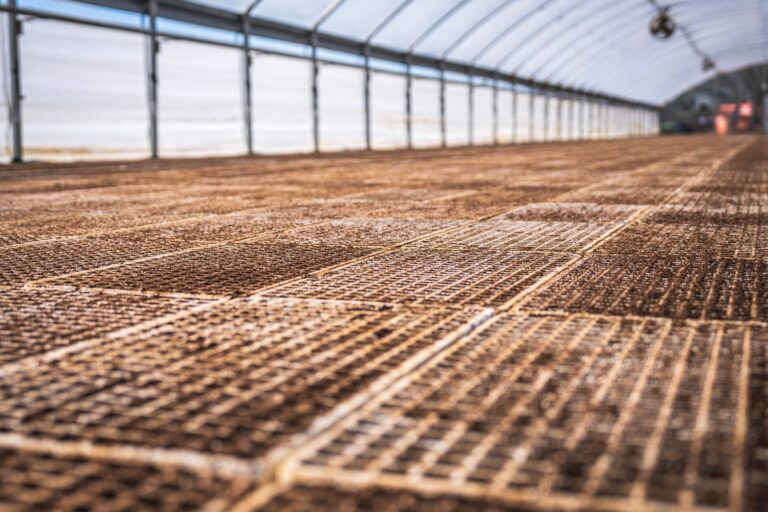
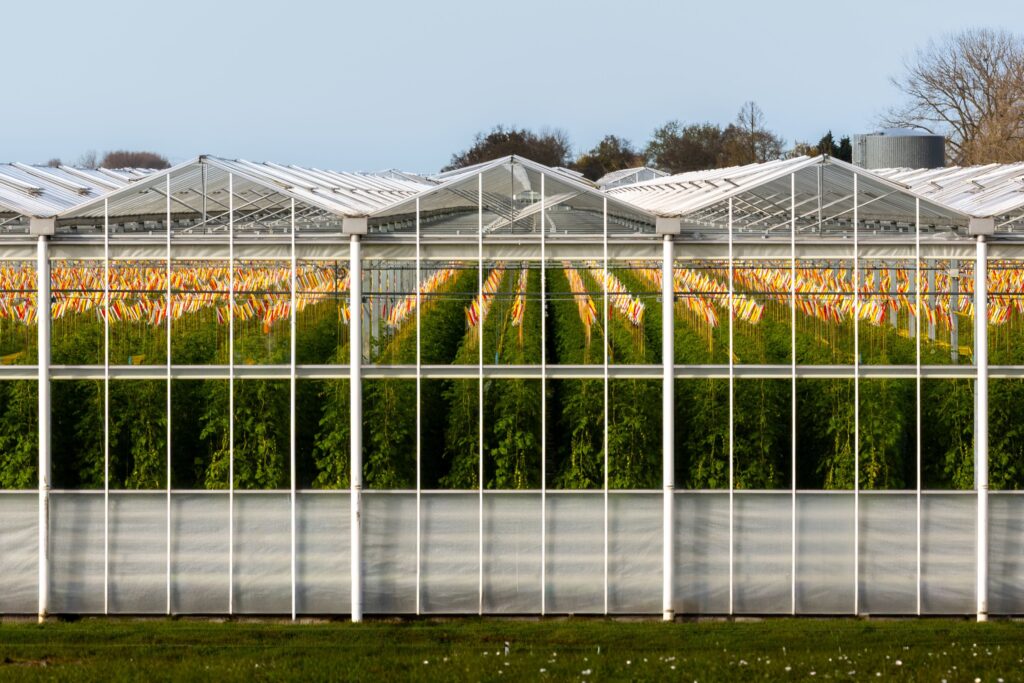
Featured image: an illustrative commercial tomato greenhouse in the Netherlands, not the Jeungpyeong facility (Igor Passchier / Pexels).