

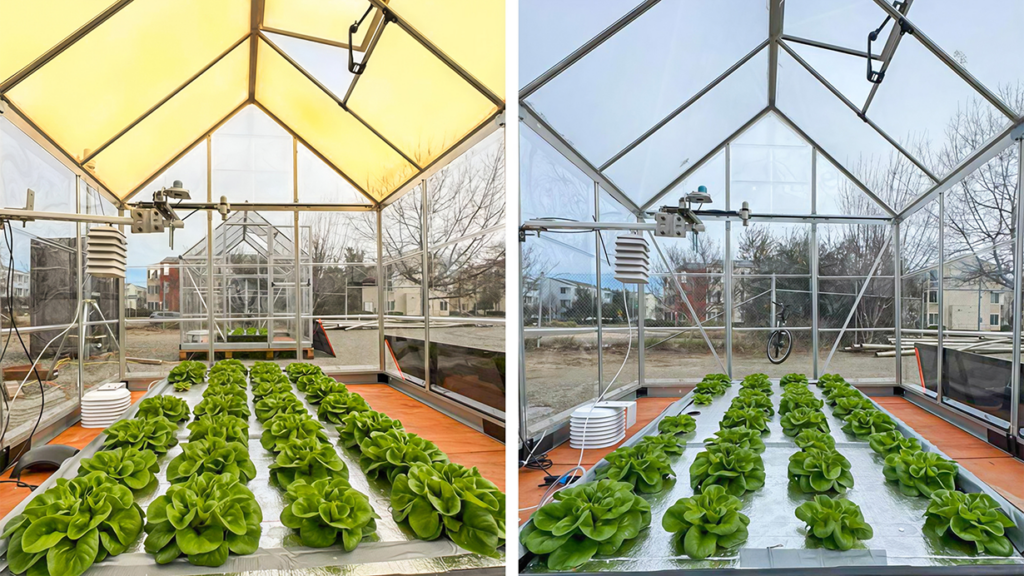
UbiQD reported on 24 November that lettuce grown beneath its quantum-dot greenhouse glazing produced more fresh biomass per litre of water than lettuce grown under conventional glass in spring 2026 trials at the University of California, Davis.
According to the company’s announcement, the hydroponic butterhead lettuce trial recorded 101 g of fresh biomass per litre under UbiGro glass, compared with 93 g/L in the control. Fresh biomass was 21% higher, while total measured water consumption increased by 10.6%. The result therefore indicates higher water productivity, not a reduction in absolute water use.
The glazing modifies the spectrum of incoming sunlight passively. The researchers also examined how environmental conditions, including radiation, temperature and atmospheric moisture demand, affect crop water consumption. UbiQD says the spring findings were presented at the 2026 annual meeting of the American Society of Agricultural and Biological Engineers.
For greenhouse operators assessing glazing options, the distinction matters: a higher yield per litre may improve resource productivity, but irrigation capacity and total water demand still need to be evaluated alongside crop output. Procurement decisions also depend on installation costs, service life and performance across seasons and crops.
The announcement does not establish commercial-scale water savings or investment returns. A full spring-trial paper, sample size, replication details and statistical significance have not been independently verified by HortiSignal. Performance in other crops and larger commercial facilities remains unconfirmed.