

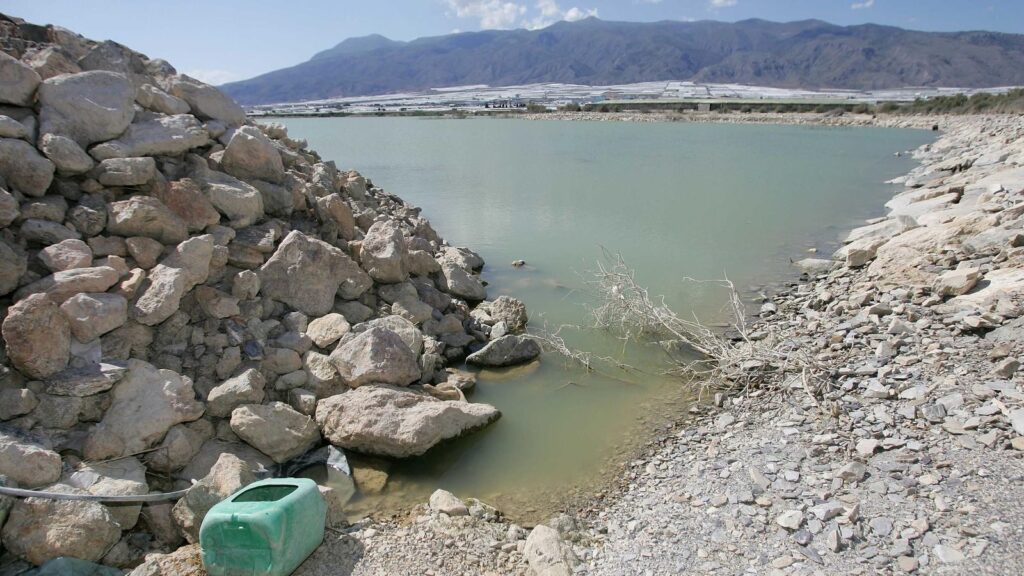
Spain’s agriculture ministry says a new irrigation-water treatment plant at Balsa del Sapo, in El Ejido, Almería, is intended to recover 1.77 million cubic metres of water a year that previously could not be used for irrigation. The update followed a visit by agriculture minister Luis Planas on 25 November 2026 to the facility serving the Sol y Arena irrigation community.
The ministry’s announcement puts investment at more than €11.4 million and identifies 4,100 irrigators cultivating 6,600 hectares in El Ejido, La Mojonera, Vícar and Roquetas de Mar as beneficiaries. That acreage covers irrigated farmland, not exclusively greenhouse production.
Treating a previously unusable water source
Water accumulating in the Balsa del Sapo has been unsuitable for irrigation because of salinity, microorganisms and suspended solids. The new infrastructure is designed to treat this resource rather than discharge it to the sea. Spain’s May 2025 official gazette decision identifies reverse osmosis as the treatment process. The November ministry update also describes photovoltaic installations and automated remote irrigation control as components of the project.
For growers in Almería’s greenhouse-intensive western district, an additional source of irrigation water could diversify supply and help ease pressure on local groundwater. However, the plant’s stated annual recovery is a projected volume, not a measured increase in water delivered to farms.
Delivery is the next milestone
The ministry’s update does not establish when regular deliveries will begin, how water will be allocated among users or what price growers will pay. Nor does the announced investment establish the project’s final reconciled expenditure. Greenhouse operators assessing water security should therefore distinguish the planned annual recovery from dependable allocations at farm level, particularly during periods of high irrigation demand.