

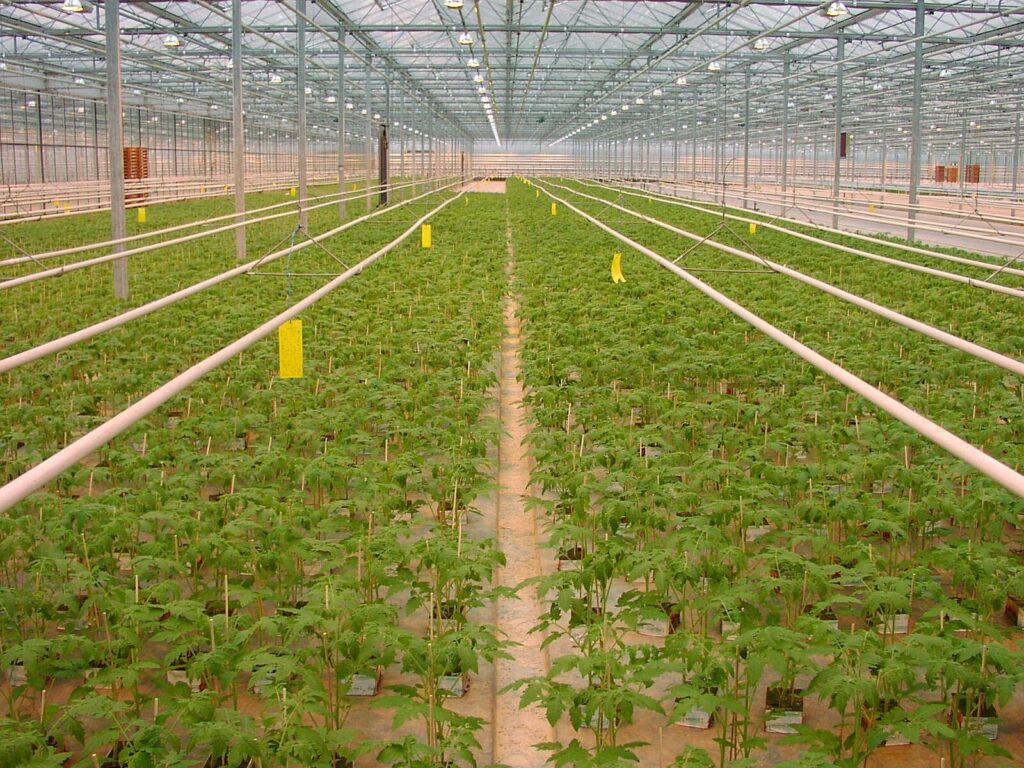
The Dutch Board for the Authorisation of Plant Protection Products and Biocides (Ctgb) has decided to extend the authorised uses of several crop-protection products relevant to greenhouse vegetables and plant propagation. The decisions were taken on 28 October 2026 and summarised by the regulator on 2 November.
However, a Ctgb board decision is not itself the start date for legally permitted use. The regulator says each decision becomes effective on publication in the Dutch Staatscourant. Growers, propagators and advisers should verify the effective publication and current product-specific legal label before making application decisions.
Which protected-crop uses are covered?
The Ctgb’s official C414 decision overview lists four relevant extensions. Proxidor, a fungicide, adds protected courgette and cucumber uses and a minor protected eggplant use. Zampro Extra, also a fungicide, adds protected tomatoes, eggplants and edible-skin cucurbit vegetables.
Verimark, containing cyantraniliprole, has a more specific propagation-stage extension for lettuce, endive and parsley plant material, alongside additional outdoor minor-crop uses. This should not be read as blanket permission to spray all mature crops: the authorised application method and circumstances depend on the product label. NEMguard DE, a garlic-extract nematicide, adds a minor protected stem-vegetable use involving incorporation shortly before or during sowing or planting.
Glastuinbouw Nederland’s greenhouse-sector summary identifies these decisions as changes to the available crop-protection portfolio, rather than a single new sector-wide pesticide rule. The same Ctgb meeting also renewed the existing Floralife Tulipa post-harvest tulip growth-regulator authorisation, a separate decision relevant to ornamentals.
Verimark matters particularly in young-plant production
In a separate explanation published on 2 November, Glastuinbouw Nederland and Plantum describe the Verimark decision as particularly important for aphid management through targeted seedling-tray treatment. The organisations also warn that dedicated efficacy and crop-safety tests were not carried out for the expanded minor uses, and recommend a trial treatment in accordance with the legally applicable conditions. That caution is not proof of performance.
What operators need to check next
For greenhouse production businesses, the commercial significance lies in potential new tools for crop and nursery-stage protection. But product names and crop lists alone are not operational instructions. The next compliance checks are each decision’s Staatscourant publication, the current Ctgb authorisation database entry, and the exact wording of the applicable label, including permitted uses and restrictions. Those individual effective dates and label conditions have not been independently established for this article.