Dutch plant-health regulator NVWA says the ToBRFV subclade known as 7AB was detected at 34 of 36 tomato-growing businesses whose virus genomes were sequenced in 2023–24. The finding, published on 8 October 2026, illustrates how widely this lineage appeared in the selected sequencing dataset, rather than measuring infection prevalence across all Dutch greenhouses.
NVWA’s latest public Nextstrain analysis combines 455 nearly complete ToBRFV genomes from 32 countries. The genetic family tree helps researchers compare virus variants, trace possible connections and identify changes worth investigating. It does not, by itself, establish which variants are more damaging or whether a particular introduction route occurred.
Resistance-breaking has not been demonstrated
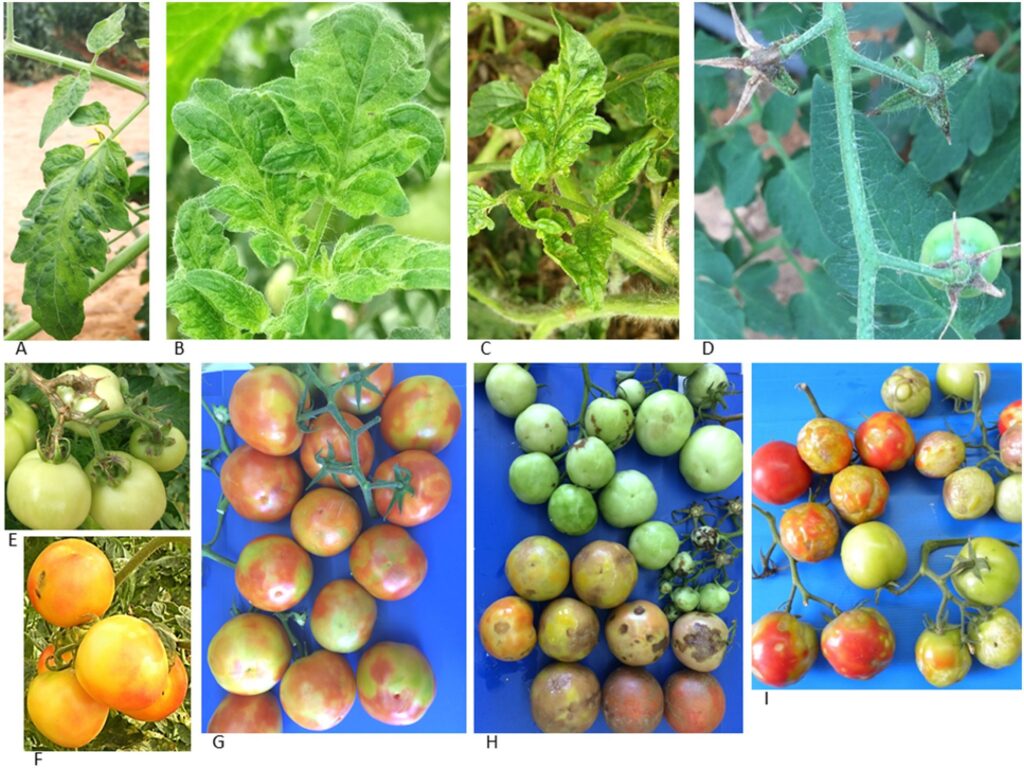
At one Dutch production site growing a highly resistant tomato variety, researchers observed symptoms and distinctive genetic changes in the virus. High virus pressure had also been recorded in the preceding crop. NVWA stresses that these observations do not prove the variety’s resistance has been broken. Controlled biological tests would be needed to establish what the mutations mean.
The agency also notes genetic similarities between variants from English tomato greenhouses and earlier viruses detected in tomatoes imported from Morocco. Similarity is a lead for surveillance, not definitive evidence of a transmission route.
Practical consequences for commercial tomato growers
NVWA says resistant varieties can suppress virus multiplication and symptoms but do not make plants immune. Hygiene, preventing introductions and keeping virus pressure low therefore remain important alongside resistant-cultivar selection and genomic monitoring.
The regulator warns against intentionally infecting crops with ToBRFV as a cross-protection strategy: that use is not authorised in the Netherlands and can raise virus pressure. Crucially, finding 7AB in 34 sequenced businesses does not mean all of them used cross-protection.
The latest report is an analysis of genetic surveillance data, not an announcement of 34 new outbreaks in 2026. For growers, the signal is to maintain biosecurity even with resistant varieties and follow further official research on the observed mutations.
Key takeaways
- ToBRFV lineage 7AB appeared at 34 of 36 Dutch tomato businesses in the 2023–24 sequencing dataset; this is not a national prevalence estimate.
- Observed mutations in a highly resistant crop have not been shown to break resistance; further biological testing is needed.
- Growers should keep virus pressure low and maintain hygiene alongside resistant varieties; deliberate ToBRFV cross-protection is not authorised in the Netherlands.
Source: Netherlands Food and Consumer Product Safety Authority (NVWA), 8 October 2026.