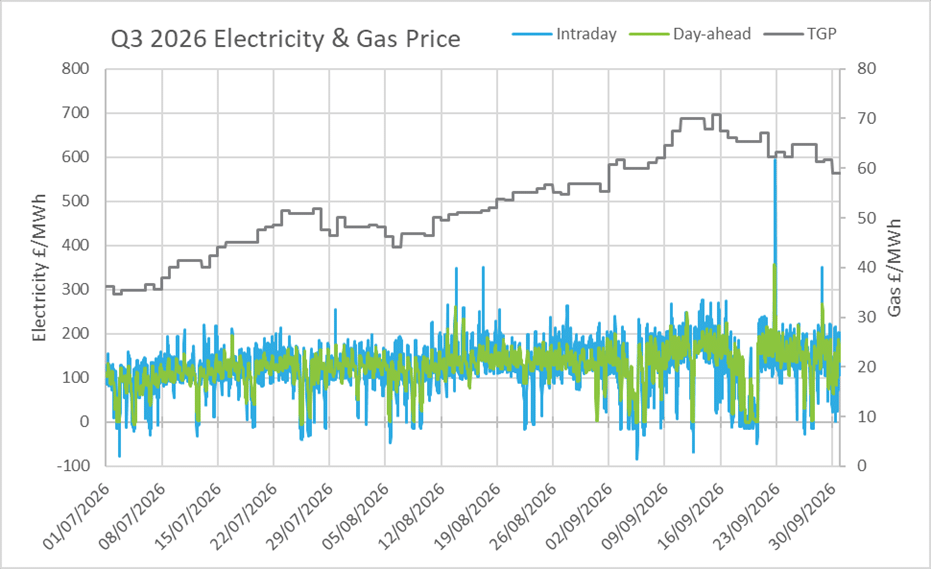
UK greenhouse businesses enter the winter procurement season after a volatile third quarter for wholesale energy. In its Q3 2026 market review, last reviewed on 8 October, horticulture energy specialist GrowSave says gas prices finished the quarter roughly 50% above their starting level, while average intraday electricity prices also moved higher.
The report puts the average increase in its intraday power-price series at about 20% from July to August, followed by another 4.5% in September. These are reported wholesale-market comparisons, not a measurement of how much any individual greenhouse’s electricity bill increased.
Power-price swings complicate winter decisions
GrowSave records intraday electricity prices as high as £600 per MWh during the quarter, compared with a high of £135 per MWh in the day-ahead market. The intraday series also included hundreds of lower-priced intervals, illustrating variation across hours rather than a constant peak cost.
Gas prices rose through much of August and declined near the end of September, according to the analyst, but the reported end-to-start increase remained substantial. Those movements matter to heated glasshouse businesses reviewing gas contracts, electricity import volumes and the operation of combined heat and power (CHP) plant before winter demand strengthens.
Operational choices depend on contract exposure
GrowSave identifies closer energy-use management, self-generation, the timing of CHP exports and possible power-purchase agreements as areas for growers to examine. These are options to assess against an operator’s own fuel prices, generator economics, contracted tariffs and crop requirements, not evidence that any particular measure will produce a guaranteed saving.
Operators with CHP may face a different electricity-price exposure from growers that buy all their power. A high intraday trading price is not the same as the net return after gas, plant efficiency, export arrangements and other costs. Equally, buyers on fixed-price contracts may not immediately experience the changes reported in the market series.
The next market signal
The review supplies a timely price-risk warning rather than a greenhouse-specific forecast. For businesses setting winter growing and lighting schedules, the practical question is which energy costs remain variable under their current contracts and whether operational flexibility can reduce exposure without compromising production.
Key takeaways
- GrowSave reports UK gas wholesale prices ending Q3 2026 around 50% above their level at the start of the quarter.
- Its average intraday power-price series increased about 20% from July to August and 4.5% again in September; those figures do not measure greenhouse bills.
- Winter procurement choices depend on each grower’s contracted prices, CHP economics and ability to shift energy demand.
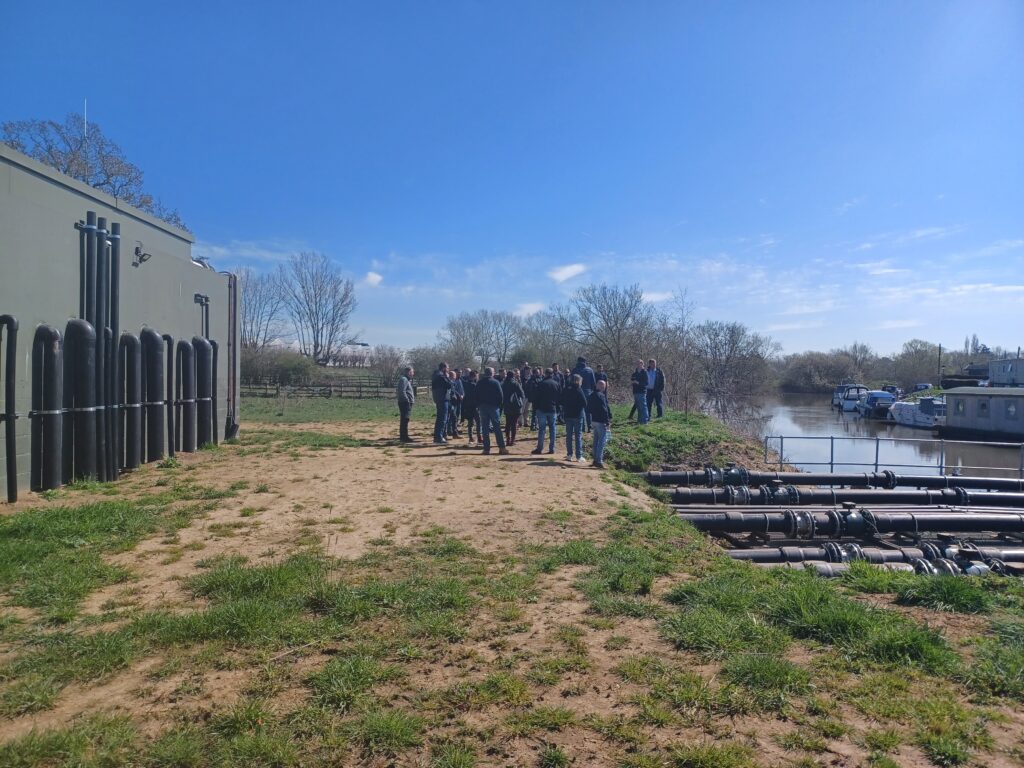
Featured photograph: UK greenhouse energy-efficiency context at GrowSave's 2023 workshop in Kent. Photo: GrowSave / NFU Energy. Archival illustration, not an image of Q3 2026 energy trading.