

Members of the Dutch heat cooperative Warmtecoöperatie Kralingerpolder symbolically signed a heat-supply agreement with Aardwarmte Delfland (ADL) on 2 November 2026. The agreement gives the proposed geothermal project a named group of greenhouse heat customers, but does not mean its wells have been drilled or that renewable heat is already being supplied. Project developer Yeager Energy announced the agreement in early November.
ADL is being developed by Yeager Energy and Harting Holland in South Holland’s Midden-Delfland area to serve commercial greenhouses and potentially other buildings. The partners describe the contract as a milestone in assembling the demand and infrastructure needed to bring the project forward.
25 MWth is the proposed capacity, not current output
According to the developer’s November update, the proposed geothermal source is expected to have a thermal capacity of 25 megawatts thermal (MWth). The first drilling operation is targeted for mid-2028 near Lotsweg 3, Midden-Delfland; the first supply of geothermal heat is expected in the fourth quarter of 2029. Those are project forecasts, not completed construction or guaranteed delivery dates.
The project’s older developer information page still describes a feasibility phase and an earlier 2027–2028 supply expectation. The specific dates in the November 2026 agreement announcement are more recent and indicate a later target. The project website also describes development work and permit preparation rather than an operating geothermal installation.
Heat network connection is part of the development
The partners plan a heat-transport and distribution system to carry future geothermal supply to the Kralingerpolder greenhouse cluster and connect with Warmtenetwerk Westland. Those links would matter as much as the well capacity: a geothermal source can only supply growers when its network and customers are connected.
Separately, energy company HVC plans the nearby Den Hoorn geothermal project along Lotsweg. Yeager says the two schemes are separate, while their developers are coordinating where possible to limit local disruption. This should not be read as a merger of their capacities, ownership or construction schedules.
Why it matters for greenhouse heat procurement
For greenhouse operators, a signed heat offtake agreement is a more concrete commercial step than an expression of interest. It can help define prospective demand for a capital-intensive geothermal development, while potentially giving growers another route to diversifying their heating supply. Yet it is not evidence of financing completion, permitted drilling or a fixed delivered heat price. Growers assessing boiler, gas or other heat-system investments still need to plan for several years before the announced geothermal supply target.
What remains unclear
The announcement does not state how many growers signed, the contracted annual heat volume, contract duration, prices, total project capital expenditure or whether all construction and drilling permits are secured. Nor has the developer shown that the mid-2028 drilling and late-2029 heat-supply milestones are firm. Confirmation of approvals, a final investment decision and actual construction would be the next meaningful developments.
Key takeaways
- Kralingerpolder’s heat cooperative signed an agreement with Aardwarmte Delfland on 2 November 2026, moving demand-side contracting forward.
- The proposed 25 MWth source and its links to the Westland heat network remain in development, with drilling targeted for mid-2028.
- First heat is forecast for Q4 2029; contracted volumes, prices, permits and financing remain insufficiently disclosed.
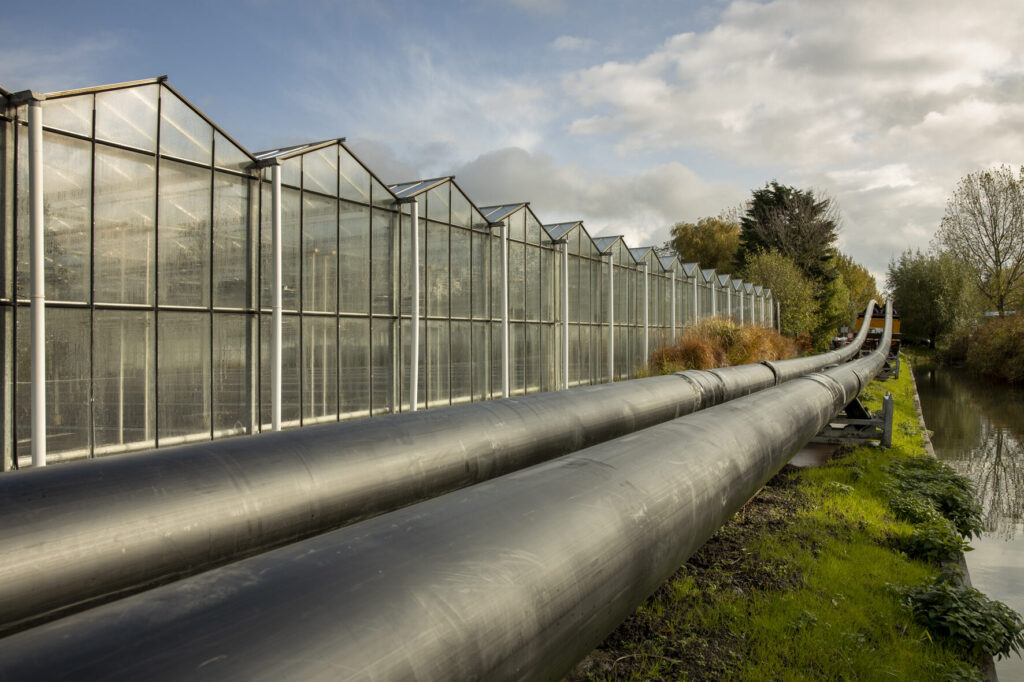
Featured image: archival HVC photograph of heat-network pipes alongside Westland greenhouses. This is contextual infrastructure, not Aardwarmte Delfland’s future geothermal facility or the contract-signing event. Photo: HVC.