

A 15-metre-high green enclosure is standing in the Lingezegen greenhouse area in Gelderland, the Netherlands, ready to house equipment intended to capture CO₂ from ambient air. The structure marks a physical construction milestone for a Skytree and Lingezegen Energy project; it does not establish that the installation is commissioned or delivering CO₂ to growers.
The latest on-site description comes from Joef Sleegers’s 11 November 2026 reporting for PlatformBloem. Separately, Skytree describes its Skypark Arnhem–Nijmegen venture with Lingezegen Energy as under construction, with an intended supply network serving ten commercial greenhouses.
The first pilot is planned at 1.2 tonnes of CO₂ a day
According to the local report, the initial installation is expected to begin as a 1,200kg-per-day pilot. Lingezegen Energy director Berno Schouten discussed that figure as a prospective output, not production already achieved. The structure is an enclosure for the capture installation; the report does not demonstrate that the full machinery has been installed or passed acceptance testing.
Project timing also needs careful interpretation. Skytree’s earlier investor page still indicates a fourth-quarter 2026 commissioning expectation. A more recent Skytree update supplied to AIPH’s FCI publication instead anticipates the first operational phase in early 2027 and a future full-deployment capacity of 8,100 tonnes a year. That revised estimate is not a measured operating result. The June partnership announcement had described an earlier 7,200-tonne annual design target.
A CO₂ hub for a mixed vegetable and flower-growing area
PlatformBloem describes approximately 100 hectares of glasshouses in the wider Lingezegen area, with roughly half dedicated to ornamental crops. Skytree’s project statements refer to ten prospective growers, including flower producers, and approximately 80 hectares linked to the intended supply arrangement. These figures describe different reported scopes and should not be treated as confirmed connected customers or delivered volume.
Why the construction milestone matters
Greenhouse operators need dependable CO₂ enrichment as they reduce the use of fossil-fuelled heating and combined heat and power systems. On-site direct air capture could provide another supply route, but its commercial value depends on the energy required, delivery reliability and cost per tonne. The new enclosure moves a named project beyond an announcement, while leaving those operational questions open.
Technology verification also matters: the AIPH technical report distinguishes earlier Wageningen trials with Skytree’s smaller Cumulus device from the larger Stratus system planned for Lingezegen. The earlier tests do not establish Stratus’s eventual commercial performance at this location.
What remains unclear
Public evidence reviewed does not establish a binding first-delivery date, completed commissioning, actual tonnes delivered, project capital expenditure, final energy consumption or grower-level CO₂ pricing. The next meaningful updates will be installation and commissioning confirmation, followed by measured output and operating economics.
Key takeaways
- A 15-metre enclosure is visible in Lingezegen, but the Skytree direct-air-capture installation is not confirmed operational.
- The reported initial pilot capacity is 1,200kg per day; Skytree’s newer first-phase target is early 2027, with 8,100 tonnes per year envisaged at full deployment.
- The project targets greenhouse CO₂ supply, including ornamental growers, while delivered volume, energy use and cost remain to be verified.
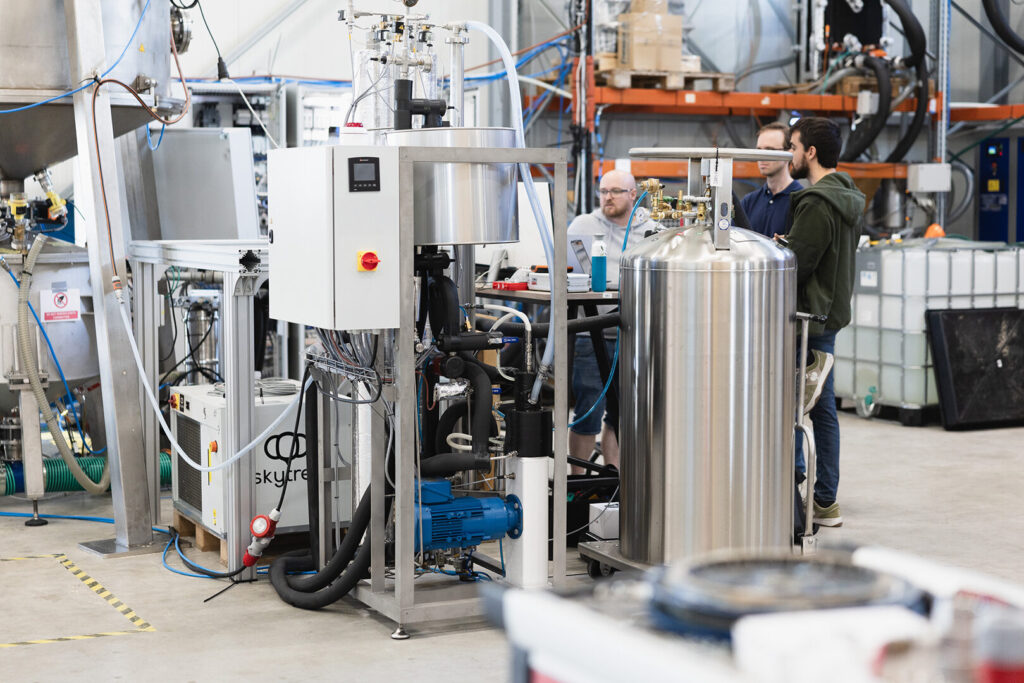
Featured image: Skytree Stratus Alpha equipment at the company’s Almere test facility, photographed for an earlier project. Archival company photograph; this is not a photograph of the Lingezegen construction site. Photo: Skytree.