

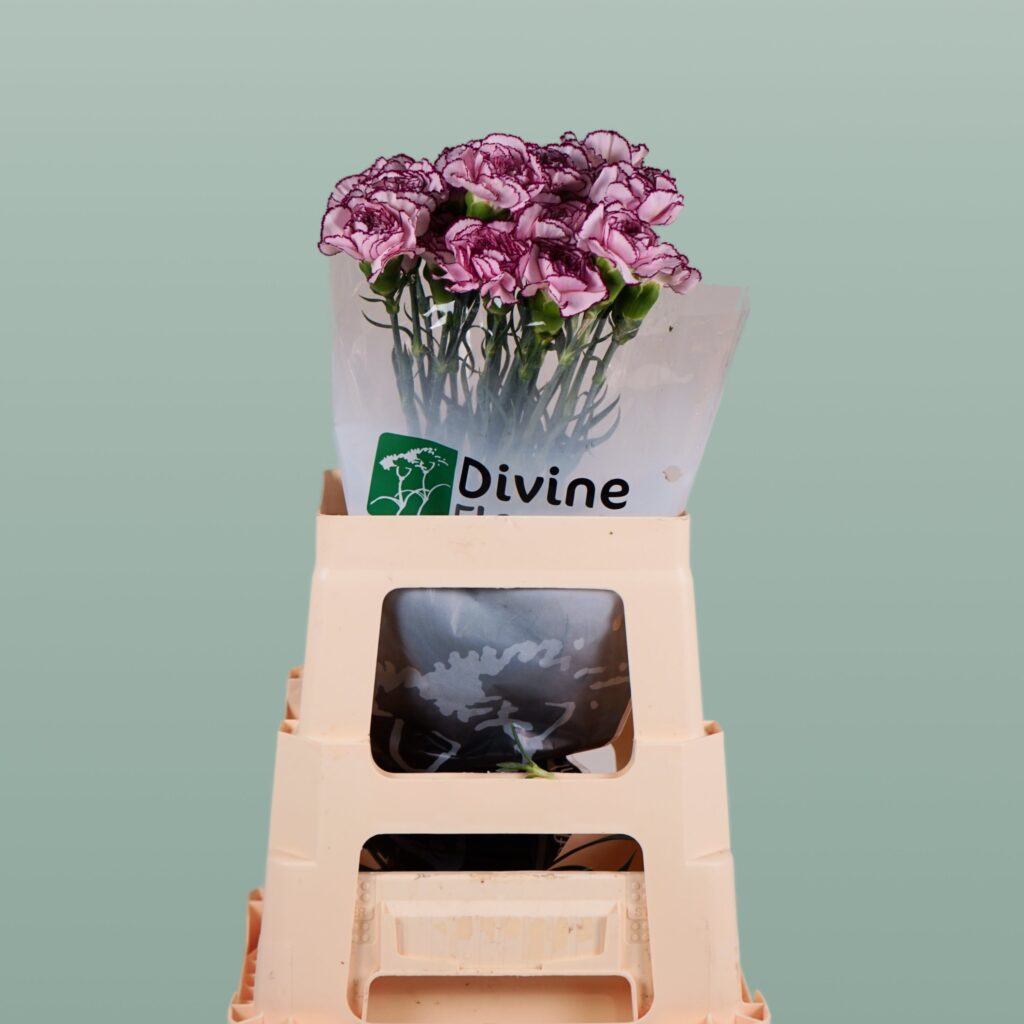
Dutch carnation producer Divine Flowers plans to phase out its cultivation operations and sell its nursery location after deciding that rising labour costs and the labour-intensive nature of its business make profitable continuation increasingly difficult. The decision was announced on 19 November 2026, but the company has not said that production has already stopped or that a sale has been completed.
The producer is part of Green Growers Group, whose management says it will concentrate future operations on potted plants through Forever Plants and Forever Plants by Divine. The announcement therefore concerns both the withdrawal of a specialist cut-flower grower and a change in the group’s production focus.
Labour costs drive a planned exit from carnations
In original reporting published by BPnieuws, Divine Flowers sales executive Arnoud Vooijs attributed the decision to higher labour costs and the organisational complexity of carnation cultivation. The business intends to wind down growing activities over the coming period and pursue the sale of its nursery site.
The statement says the wind-down process will pay particular attention to employees. It does not establish a timetable for final cessation, a sale agreement, a buyer or the number of jobs affected. Describing the company as already closed would therefore overstate the announcement.
Green Growers Group turns to potted plants
Green Growers Group executive Thom Persoon said the shareholders had agreed to direct their focus towards the potted-plant activities. The group was formed in 2024 from the combination of Forever Plants, Divine Flowers and Forever Plants by Divine, as shown in Forever Plants’ original merger announcement.
Divine Flowers’ company history describes an approximately four-hectare Dutch carnation operation developed by the Nieuwland and Martin Zwinkels nurseries. That is historical background, not a verified area for the current planned property sale.
Why it matters to ornamental greenhouse operators
Carnation production depends on careful, repeated crop handling and a broad product assortment. The decision illustrates how labour intensity can weigh on the economics of specialist greenhouse flowers even when the business has an established market presence. For cut-flower buyers, growers and suppliers, the practical next signals will be when cultivation ends, how customers are supplied during the transition and what becomes of the nursery assets.
What remains unclear
No final production date, confirmed site-sale terms or staffing outcome was disclosed in the 19 November announcement. These are the developments that would determine the immediate market impact.
Key takeaways
- Divine Flowers has decided to wind down Dutch carnation production; closure and sale are not yet reported as completed.
- Management identifies rising labour costs and operational complexity as central reasons.
- Parent Green Growers Group plans to concentrate on potted plants through its other businesses.