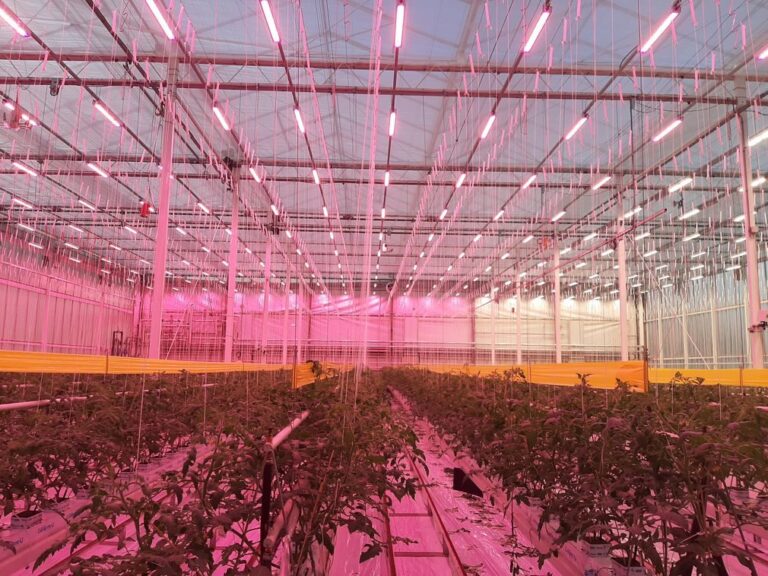


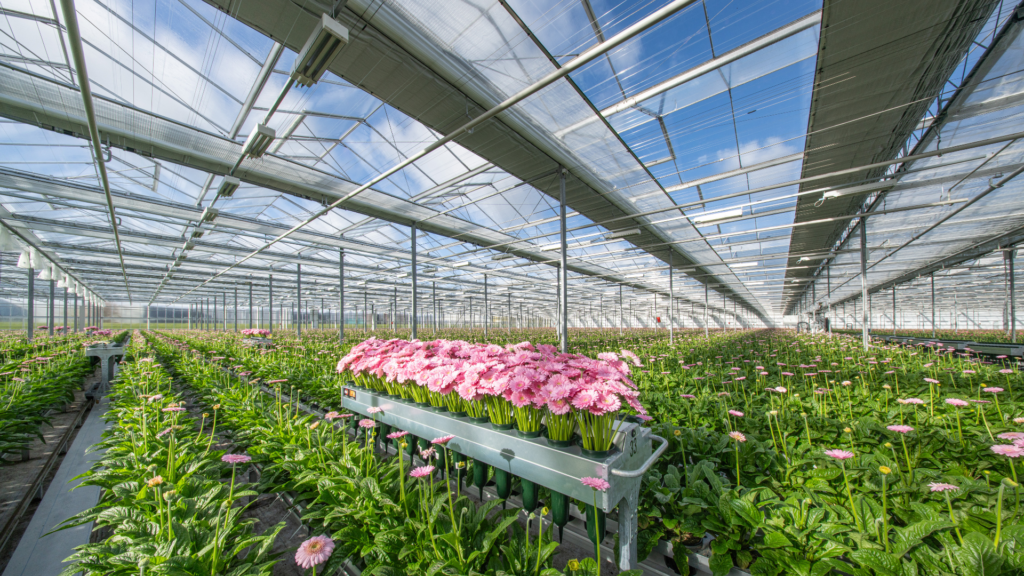
Dutch mini-gerbera grower EveryD Flowers has added an overhead heating network to its greenhouse on Kasteelweg in De Lier, according to FloralDaily’s 25 November report on the installation by Hortivision. The retrofit covers a greenhouse of just over three hectares connected to a geothermal heat network.
The report attributes a reduction of at least 15°C in return-water temperature to the new configuration at equivalent heating output. The figure describes reported thermal performance, not a measured reduction in the grower’s energy bill.
Two heating networks in sequence
Rather than operating the additional pipes exclusively as a separate heating circuit, the design directs the hottest supply water through the overhead network first. Water then passes through the larger existing pipe-rail system beneath the crop. The two systems can also be operated in parallel when required, according to the Dutch-language account in BPnieuws.
The additional radiant heat above the gerberas is intended to address crop cooling following the switch to LED lighting. The reports describe less condensation on the flowers and longer periods with the climate screen closed. Both accounts appear to describe the same supplier-origin information rather than independent trials.
EveryD Flowers reports operating four cultivation locations totalling 16 hectares. For geothermal-connected growers, the installation illustrates how heat distribution within a greenhouse can affect both crop conditions and the temperature of water returned to the network.
The exact installation date, independently measured seasonal energy consumption and capital cost have not been disclosed in the available reports. The reported temperature difference therefore cannot yet establish the retrofit’s financial payback.