Canada’s federal government is proposing to make immediate expensing permanent for a much broader range of capital assets, a change that would extend the tax advantage available to qualifying greenhouse investment beyond the temporary timetable introduced in 2025.
The Department of Finance says the proposed Productivity Mega Deduction would apply to most depreciable property acquired on or after September 15, 2026. A later federal announcement explicitly lists greenhouses among the assets covered by the expanded regime, alongside equipment, software and infrastructure.
What changes for greenhouse investment
The greenhouse sector already had a targeted accelerated allowance. Draft tax rules published earlier in 2026 provide up to 100% first-year capital cost allowance for an “eligible greenhouse” that becomes available for use before 2030, with the enhanced rate stepping down in later years and ending after 2033.
The new Productivity Mega Deduction proposal is broader and permanent. Finance Canada says eligible depreciable property acquired from September 15, 2026 would generally be immediately expensed in the year it becomes available for use. That can improve project cash flow by bringing tax deductions forward rather than spreading them over the normal depreciation schedule.
Asset classification still matters
The policy is not a blanket write-off for every dollar spent on a greenhouse project. The detailed backgrounder excludes buildings and additions in capital cost allowance Classes 1 and 3, among several other categories. Canada Revenue Agency guidance places certain greenhouses in Class 6 and rigid-frame greenhouses covered with replaceable flexible plastic in Class 8, but additions and other project components can fall into different classes.
That distinction matters for new builds and major modernisations. The government’s September 29 release says greenhouses are included among eligible investments, but operators will still need to map structures, equipment and additions to the applicable tax classes rather than assume an entire project receives identical treatment.
Why the signal matters
For Canadian greenhouse operators, the change could affect the timing and after-tax economics of expansion, replacement equipment and modernisation. The benefit is strongest where a large share of planned capital falls into eligible classes and the business has taxable income against which the deduction can be used.
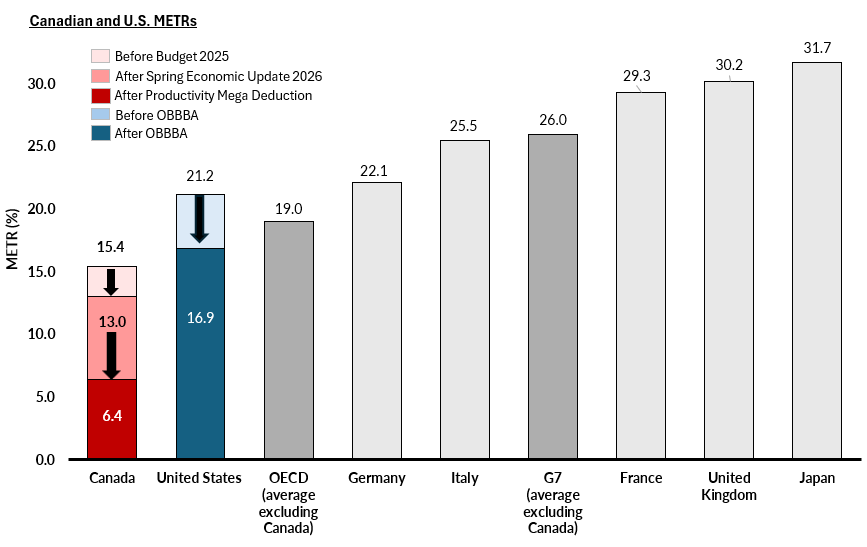
At the economy-wide level, Finance Canada estimates the measure would increase the share of capital investment eligible for immediate expensing from about 15% to roughly two-thirds and reduce Canada’s marginal effective tax rate on new business investment from 13.0% to 6.4%. Those figures are government estimates, not a greenhouse-specific return calculation.
What remains unclear
The measure is a federal proposal, so final legislative wording and tax guidance remain important. The practical benefit for any greenhouse project will depend on its asset mix, acquisition date, when assets become available for use and the final rules applying to each CCA class.
Key takeaways
- Canada proposes permanent immediate expensing for most depreciable property acquired from September 15, 2026, and the federal government explicitly lists greenhouses among covered investments.
- The proposal would extend the investment incentive beyond the temporary accelerated greenhouse allowance introduced in 2025.
- Greenhouse structures, equipment and additions can fall into different CCA classes, so project-level eligibility will depend on asset classification.