Royal FloraHolland is preparing a new tariff structure for 2027 that would change how flower and plant suppliers pay for membership, transactions and logistics. The cooperative’s member council approved the underlying model in June 2026, but the specific rates circulated in September remain proposals pending a December decision.
In a 24 September member update attributed to Royal FloraHolland and reproduced by BPnieuws, four revised member packages — A, B, C and D — are described for a planned 1 January 2027 start. The proposed structure gives different weight to shared cooperative costs and a business’s actual use of auction, digital trading and logistics services.
Four packages reflect how members trade
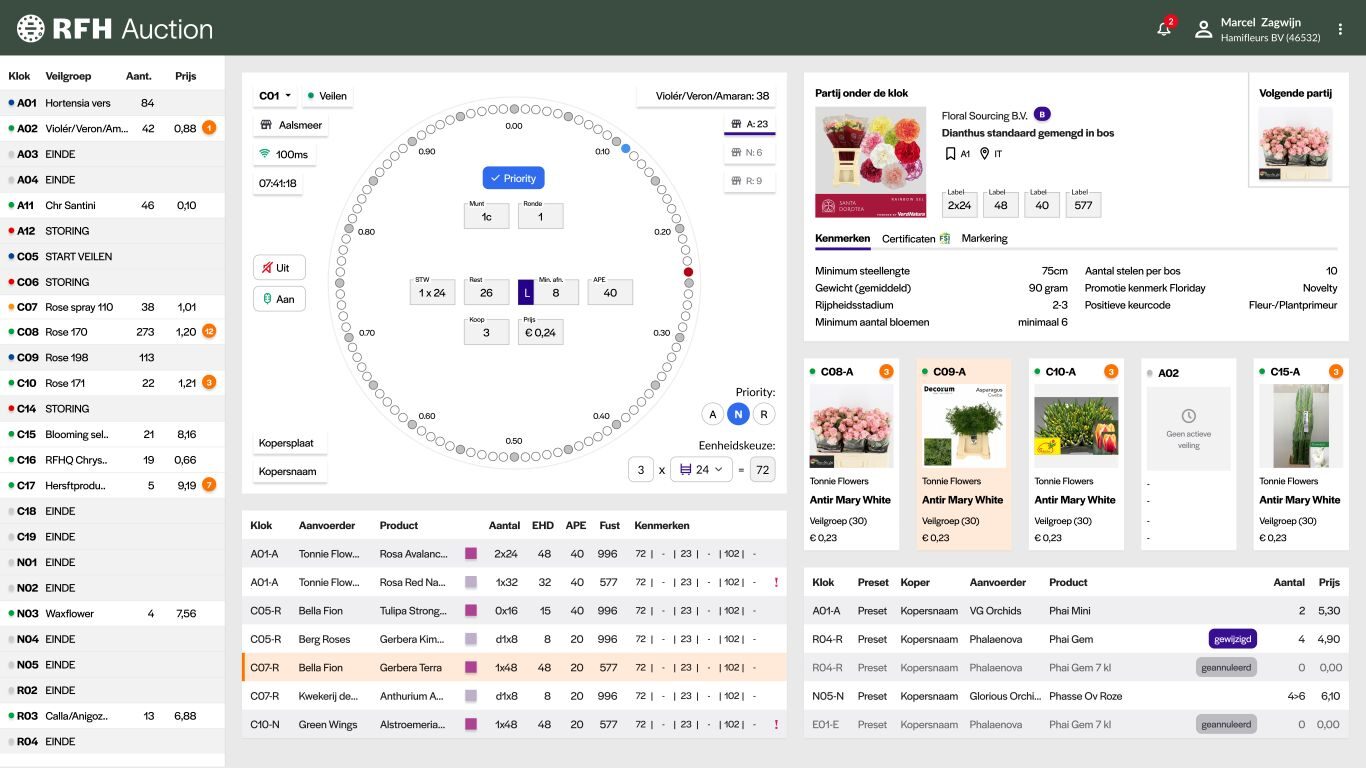
Package A targets members trading directly and using Floriday Daytrade rather than the auction clock. Package B is mainly for direct traders who want auction or presale flexibility. Packages C and D are aimed at businesses making substantial use of the clock and other trading channels while also selling directly. The indicative distinction between C and D is annual turnover of about €1 million.
That means the effect on an individual ornamental grower’s costs will not be uniform. RFH says some members could pay less and others more depending on their trading mix and logistics needs. It plans to send personalised assessments during October and recommends that members choose their preferred package before 14 December 2026.
2027 rates are not yet final
The September notice also proposes a further 0.05 percentage-point commission increment in 2027 to finance the cooperative’s Real Estate Masterplan. That would bring the accumulated uplift for the plan to 0.15 percentage points by 1 January 2027; the full long-term increase envisaged is 0.30 percentage points. The 0.15-point figure is not a new one-year increase on top of the 0.05-point increment.
The planned rate card includes specific logistics incentives, such as a €2.50 per-cart discount for eligible GP+ auction groups. Members are being directed to RFH’s online comparison calculator, but the final 2027 tariff schedule is expected only after the member council’s December decision.
Why flower businesses should assess the change now
For greenhouse floriculture companies trading through RFH, the important near-term decision is which service bundle best matches their actual routes to market. A business using direct sales, auction channels and cart logistics differently may face a different cost profile under the same framework. The published proposal is enough to support scenario planning, not a basis to treat the rates as already approved.
Key takeaways
- RFH’s underlying tariff model was approved in June, but the detailed 2027 prices remain provisional.
- Four proposed member packages align charges more closely with trading-channel and logistics usage.
- Members are advised to select a package by 14 December; the final rates await the December council decision.