

Pepper exporters in Spain’s Almería province generated €1.235 billion in export value during the 2025/26 marketing season, a record in a new analysis published by Hortoinfo on 6 November 2026. The value milestone came despite shipments of 513.64 million kilograms, or 17.46% less than the province’s 2019/20 peak of 622.26 million kilograms. The comparison is with a six-season-old volume high, not the previous year.
The report covers exports between 1 September 2025 and 31 August 2026. Export receipts measure the value of goods sold abroad; they are not a measure of growers’ profits, farm-gate prices or production yields.
Record export value, lower physical volume
Hortoinfo calculated the figures from Spain’s customs trade statistics supplied through the ICEX ESTACOM database, using tariff code 070960 for fresh or chilled peppers. It reports Almería export value of €1,235.05 million at an average of approximately €2.40 per kilogram. The precise provincial data extract for the stated months has not been separately reproduced here, so these record and unit-value calculations remain attributed to the publisher.
The province’s reported exports are 108.62 million kilograms below the 2019/20 volume peak. The newer value record and older tonnage high describe different measures: neither alone establishes how farm profitability changed over the period.
Almería accounts for nearly two-thirds of Spain’s shipments
For the same September–August period, Hortoinfo puts Spain’s total pepper exports at 781.73 million kilograms, worth €1,853.95 million, and gives Almería 65.73% of the national export volume. Murcia was a distant second with 143.17 million kilograms, or 18.32% of Spain’s total.
For greenhouse operators, marketers and buyers, that concentration makes Almería a significant region to monitor for supply conditions and trading exposure. The customs figures distinguish a product and province, but do not themselves measure the share originating from any particular protected-cultivation system.
Thrips pressure matters, but its contribution is not measured
Hortoinfo links much of the longer-term shipment decline to the spread of Thrips parvispinus and affected crops being removed. That is the publication’s interpretation; its analysis does not quantify how much of the difference between 2019/20 and 2025/26 is attributable to the pest rather than other production and trading factors.
The crop-protection threat is real: the Andalusian government reported more than 900 inspections concerning T. parvispinus in October 2026. That enforcement information provides recent context, not a retrospective calculation of export tonnage lost during the completed season.
What commercial buyers should watch
The figures offer a benchmark for the value and physical scale of a key pepper-exporting region without implying an equivalent improvement in grower earnings. Future export releases can show whether volume recovers, whether average export unit values hold and how regional supply concentration changes. Separately, measurable pest-control outcomes will be more informative than attributing the entire historical volume gap to one cause.
Key takeaways
- Hortoinfo reports record Almería pepper-export value of €1.235 billion for September 2025–August 2026.
- Shipments were 513.64 million kg, 17.46% below the 2019/20 volume peak; Almería accounted for 65.73% of Spain’s pepper-export volume in 2025/26.
- The publisher identifies Thrips parvispinus as a major pressure, but no verified proportion of the long-run volume decline has been assigned to the pest.
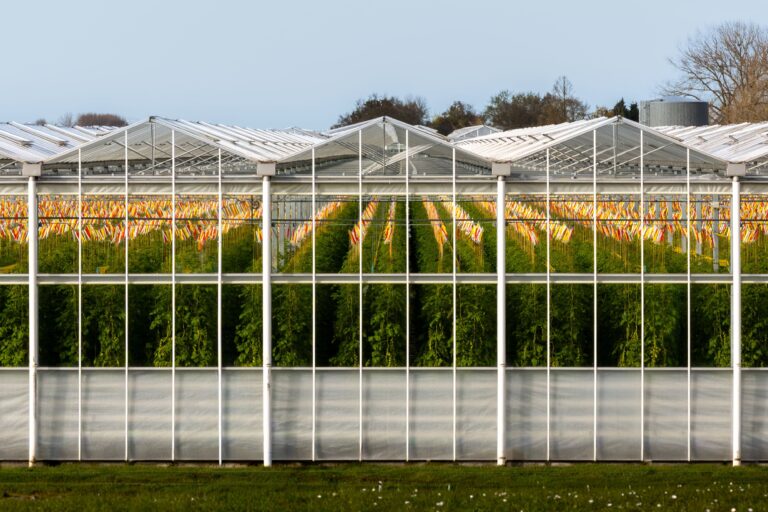
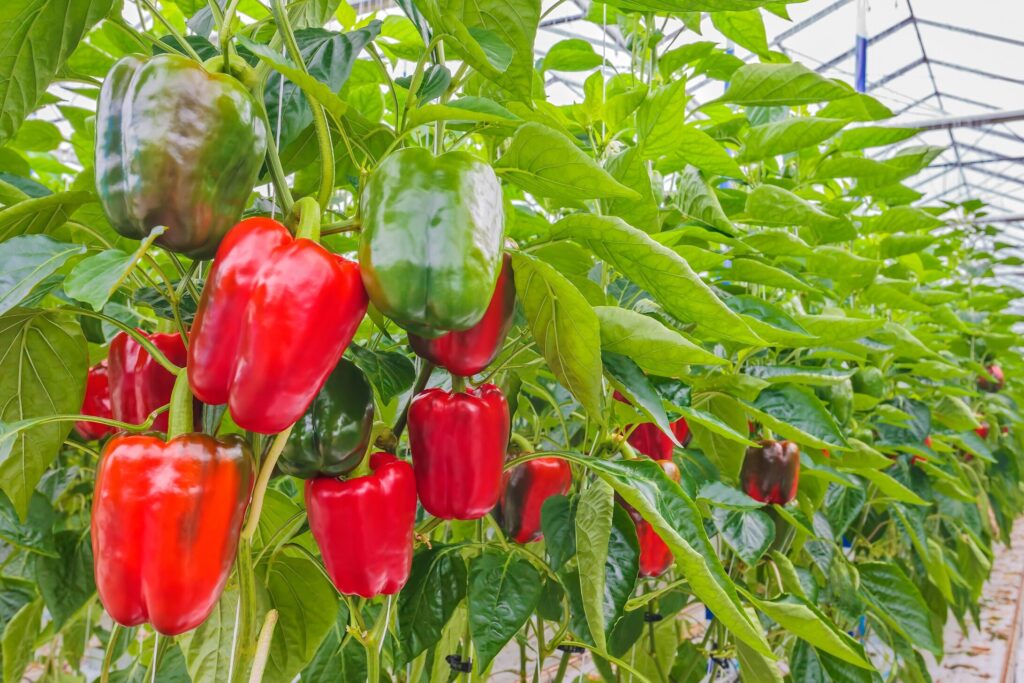
Featured image: official archival photograph of greenhouse peppers provided by the Junta de Andalucía in a May 2026 announcement. It is contextual imagery, not a photograph documenting the 2025/26 export figures. Photo: Junta de Andalucía.