

CRETA Group is testing a subsurface greenhouse-cooling system at a 520 m² pilot in Al Ain, United Arab Emirates, as part of the Mohamed bin Zayed Water Initiative’s Al Miyah Challenge for Agriculture. In a 9 November 2026 interview with Emirates News Agency (WAM), the company reported air-temperature reductions of approximately 12–15°C. This is developer-reported pilot performance, not independently audited commercial evidence.
The initiative’s official CRETA case study places the field-test reference at 520 m² and describes a cooling method intended to reduce the water and electricity demands of protected cropping in hyper-arid climates. The technology is at a field-testing stage; its use at the site is not evidence of a commercial-scale rollout.
Subsurface heat exchange, then targeted crop-zone airflow
CRETA’s design draws hot desert air through underground channels at about 3–3.5 metres depth, using relatively stable soil temperatures to precondition it before entering a dual-shell greenhouse structure. Controlled fans and airflow paths aim to regulate conditions around the crop canopy rather than mechanically cooling the full enclosed air volume.
According to the company, its pilot installation operates at roughly 7–8 kW and has used 30–40% less cooling-related electricity than conventional systems. The initiative separately estimates 20–40% lower electricity demand when comparing the concept with mechanical chilling. Those comparisons have different stated reference points and remain company or programme estimates; independently verified, like-for-like seasonal energy results were not available in the reviewed sources.
The 85–90% water saving is a design goal
WAM distinguishes CRETA’s target of 85–90% lower cooling-water use against conventional fan-and-pad cooling from final measured outcomes at Al Ain. The distinction matters: the proposal targets water consumed to cool air, not the irrigation water required by a crop. The initiative calculates that a 520 m² reference greenhouse could otherwise consume roughly 500–936 m³ of cooling water over 120 peak-summer days, using stated conventional assumptions. That is a modelled comparison, not a measured saving from this pilot.
Why the next field results matter
CRETA estimates an initial installation cost premium of approximately 20–30% over conventional systems, dependent on site conditions and design. Greenhouse developers assessing the technology therefore need a full comparison of capital cost, electricity, cooling water, maintenance, humidity and crop yield, ideally across the hottest months and under matched operating conditions.
For operators in the Gulf and other water-scarce markets, the pilot presents a plausible engineering alternative to water-intensive evaporative cooling. Whether it delivers durable savings and a competitive payback at multi-hectare commercial scale remains unproven in the evidence reviewed.
Key takeaways
- CRETA’s Al Ain 520 m² greenhouse is a field pilot, not a confirmed commercial deployment.
- The reported 12–15°C air reduction and 30–40% electricity difference are company figures; an 85–90% cooling-water reduction remains a design target.
- Independent seasonal measurements and a comparison against the estimated initial cost premium are the next useful evidence.
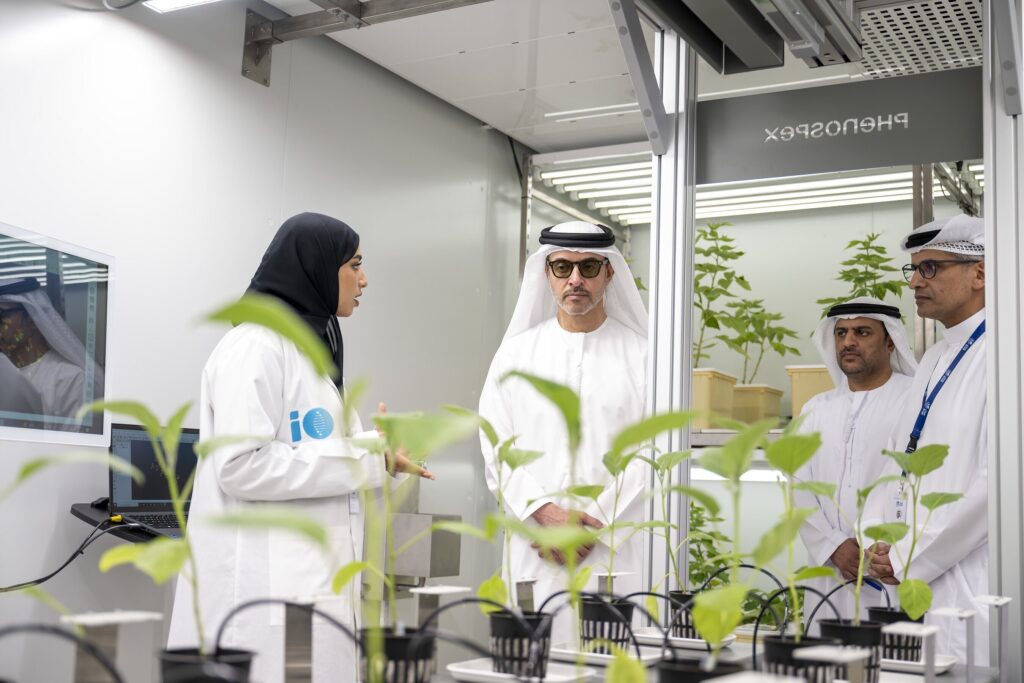
Featured photograph: archival official image from the April 2025 opening of Silal’s Innovation Oasis research facility in Al Ain, the test venue for the Al Miyah Challenge. It does not depict CRETA’s specific 520 m² greenhouse. Photo: Silal / PR Newswire.