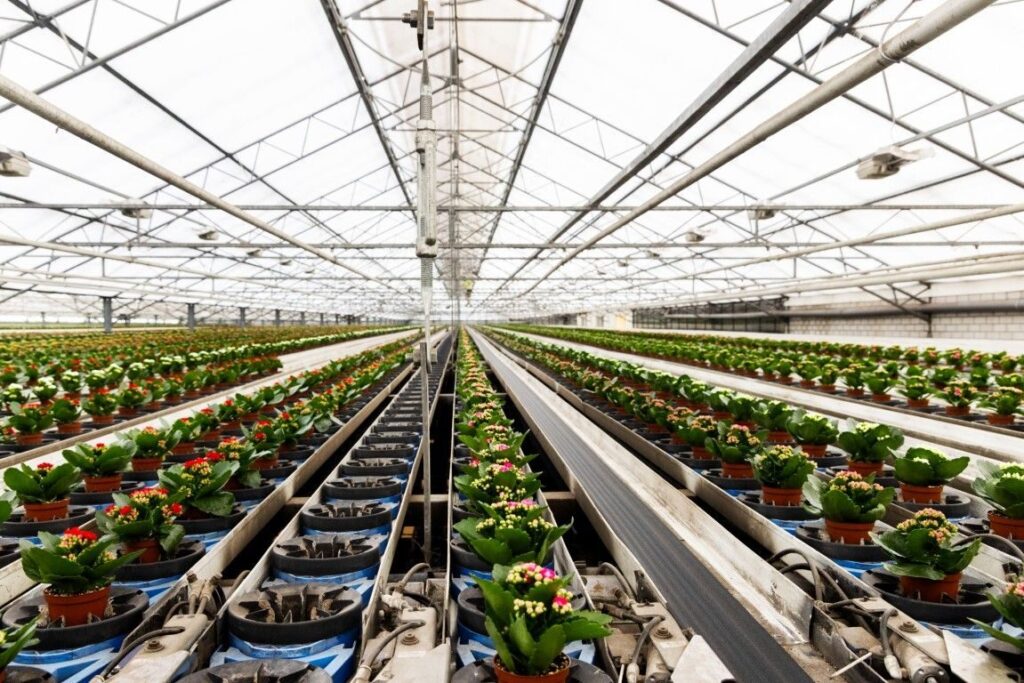
A Dutch greenhouse trial suggests that commercial Kalanchoe may tolerate substantially lower crop evaporation than traditionally assumed without losing measurable plant quality. Researchers from Plant Lighting and Delphy Improvement Centre compared three evaporation treatments between December 2025 and March 2026 in Bleiswijk, with results released by Glastuinbouw Nederland on 7 October 2026. The findings offer a possible way to rethink humidity management and greenhouse screening, rather than a validated promise of lower total energy bills.
The original Kas als Energiebron programme report describes three average evaporation levels of 0.4, 0.55 and 0.7 litres per square metre per day. Relative humidity was kept above 85% for much of the trial. Researchers measured evaporation continuously and examined plant growth, leaf form, flowering and final product quality.
Higher evaporation did not improve plant quality
Despite the markedly different water-loss conditions, the project found no material differences in growth and end-of-crop quality among the three treatments. Even the lowest-evaporation group produced saleable-looking Kalanchoe under the trial’s controlled climate and cultivation conditions. The researchers reported no clear increase in undesirable leaf growth or flower-quality problems associated with the sustained high humidity.
At the same time, the programme calculated that the highest-evaporation treatment required approximately 70% more energy for evaporation than the lowest treatment. That is a comparison of calculated evaporation-energy demand between treatments, not a measurement of 70% savings on a greenhouse’s total heating or electricity bill.
What growers can take from the findings
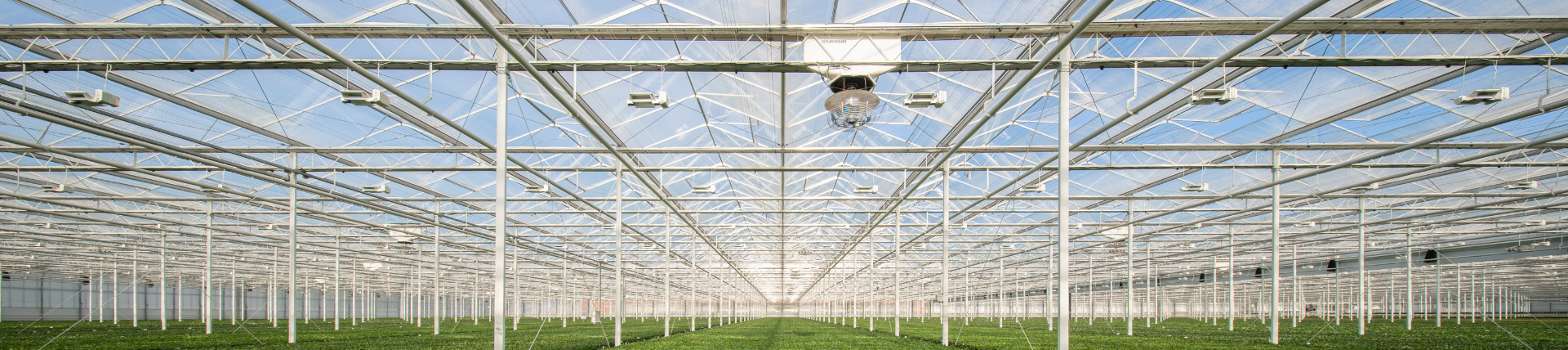
Moisture removal through ventilation or dehumidification can carry significant energy costs in insulated greenhouses. If Kalanchoe crops can retain quality under a higher relative humidity, growers may have more flexibility to keep energy screens closed and avoid unnecessary moisture extraction. Actual energy savings depend on the greenhouse’s heating, climate-control and dehumidification systems.
The previous Kalanchoe research report from December 2025 is useful background but covers an earlier experiment, not the new three-level trial.
What is not established
The observations do not resolve fungal-disease risk across different cultivars, seasonal weather conditions or commercial greenhouse designs. Further work is required to establish how low evaporation can safely be set across production systems and what utility savings growers actually achieve.
Key takeaways
- A controlled Kalanchoe greenhouse trial compared evaporation at 0.4, 0.55 and 0.7 L/m²/day with high relative humidity.
- Researchers found similar plant quality across treatments, suggesting potential to reduce unnecessary moisture removal.
- The reported 70% energy difference relates only to calculated evaporation energy, not total greenhouse energy consumption.