

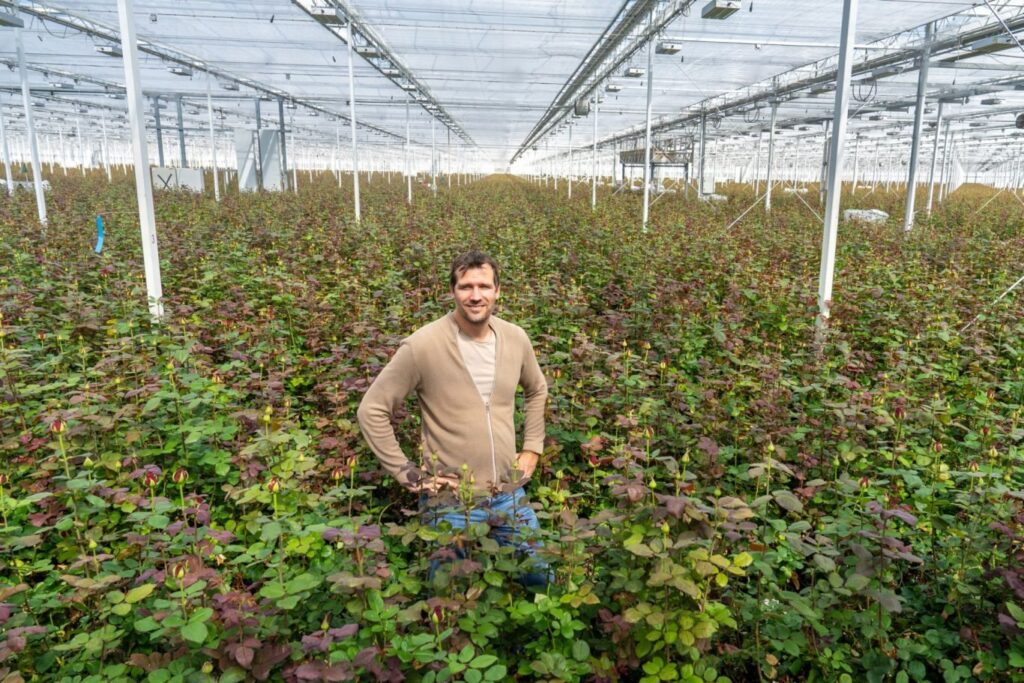
Dutch cut-flower grower Marjoland plans to switch five hectares of its existing Red Naomi rose greenhouses in Waddinxveen to mini gerberas, known in the trade as germinis. The decision, outlined by Marjoland representative Leonie Plasman in a 23 October interview with BPnieuws, adds a new crop to a business that has specialised in roses for around four decades. It is a conversion of existing protected-growing space, not a new greenhouse build.
The company has been growing Red Naomi on 13.5 hectares across three greenhouse blocks. One block’s rose plants are approaching the end of their productive replacement cycle, creating the opportunity to switch crops. According to Plasman, the five-hectare change would leave about 8.5 hectares under Red Naomi and approximately 15 hectares of rose production overall, while bringing germinis into the assortment for the first time.
Forty varieties selected as cultivation systems change
Marjoland has chosen a range of 40 germini varieties and bought new grading equipment, BPnieuws reports from its original company interview. Germinis will require different growing arrangements: the roses currently grow on gutters, whereas the incoming gerbera plants will be cultivated in pots. The company also plans to explore sorting cut flowers into more distinct lengths, drawing on its existing rose-grading practices.
The switch is scheduled to begin with rose removal from 1 November 2026. Germini planting is targeted for approximately week 11 of 2027, with an initial harvest expected around May 2027. These are plans; the new crop is not yet in production.
Rose portfolio also changes as growers respond to margins
The germini decision is part of a wider assortment review. Marjoland also intends to remove 1.6 hectares of white Dolomiti roses and add six garden-rose selections. The company’s existing rose portfolio includes Red Naomi and several garden-rose varieties, but the older company webpage predates these October changes and should not be read as proof that the new planting has occurred.
Plasman linked the decision to weakening returns on Red Naomi relative to rising production costs. She also said the crop change would reduce the company’s winter gas requirement, allowing it to cover its remaining forecast fuel needs at contracted prices. These are management’s assessments rather than independently measured cost savings.
Established sales routes reduce the need for a new distribution network
Marjoland expects to serve a similar customer base of florists and wholesalers with germinis. The grower already sells cut flowers through domestic trade and auction routes, as described on its corporate website; that existing distribution base may simplify the commercial transition, though the customer mix and volume for germinis are not yet known.
The commitment is notable for the scale of a single crop decision: five hectares of an established Dutch rose greenhouse operation will be repurposed at once. Suppliers and wholesalers can follow the conversion work, planting date and initial harvest rather than count the project as an increase in net glasshouse capacity.
Key takeaways
- Marjoland is reallocating five hectares from Red Naomi roses to mini gerberas in Waddinxveen, without adding new greenhouse land.
- Forty germini varieties and new sorting machinery have been selected; plants are intended to go in during March 2027.
- The first germini harvest is targeted for May 2027, while sales volumes and actual cost impacts remain unconfirmed.