

Swedish farm-software developer AgriSfeer says its digital pest-scouting platform is being used at Nini, a commercial cut-flower grower in Kenya. In a 9 November 2026 FloralDaily interview, Nini’s systems development manager Carla Ulyate describes using bed-level pest observations to identify hotspots, propose targeted spray programmes and monitor crop-protection use and costs.
The business signal is a named export-flower customer reporting a working digital scouting process rather than only an untested software concept. It is not yet evidence of a measured pesticide reduction: neither the customer account nor the vendor’s published materials establish farm-specific chemical savings, audited results or the size of the deployment.
From paper observations to bed-level pest maps
AgriSfeer Scout lets workers record observations on mobile devices against greenhouse bays and beds, according to the supplier’s product documentation. Maps show where pest or disease pressure has been reported and how it changes over successive scouting rounds. AgriSfeer describes an Android workflow that can be used offline and then synchronised.
At Nini, Ulyate says the resulting map gives farm managers a more precise location for reported problems than earlier scouting reports. Her account describes software-generated spray-programme suggestions that the grower’s team reviews before application. That human check matters: a claim elsewhere in the vendor-supplied story that the system requires no further human interpretation should not be read as proof of autonomous chemical application or regulatory compliance.
Customer relationship predates the scouting announcement
Nini’s own published case study confirms its partnership with AgriSfeer, including a maintenance-management application for inspections, equipment tasks and audit records. The grower described scouting, pest heatmaps and targeted plant-protection planning as features being developed together. The more recent November interview indicates use of the scouting functionality, but does not independently identify the date it became operational across all of Nini’s greenhouses.
The same distinction applies to claims about savings. AgriSfeer argues that accurate location data can help avoid spraying an entire greenhouse when only certain beds need intervention. That is a plausible operating use case, not a verified performance outcome at this customer. A reduction figure cited for unrelated research must not be presented as Nini’s achieved result.
Why greenhouse operators should pay attention
For commercial flower growers, actionable scouting records can support crop-protection decisions, scouting labour organisation, traceability and discussions with export buyers. Prospective customers should ask for a demonstration on their own greenhouse layout, clarity on which recommendations require approval, and actual farm-level comparisons of application volumes, labour hours and pest outcomes.
Those measurements are not in the public case. Neither farm hectares covered by AgriSfeer Scout nor licence economics, customer-wide adoption rates, or independently audited environmental savings have been disclosed. No particular European pesticide rule should be inferred from the product announcement alone.
What remains unclear
Nini and AgriSfeer have not disclosed which fraction of the rose crop is actively tracked with Scout, whether it is a site-wide deployment or a limited operational phase, or independently measured changes in chemical use or crop losses. Further evidence would be a documented pre- and post-deployment comparison from the farm, ideally separating software effects from other integrated pest-management changes.
Key takeaways
- A named Kenyan rose grower reports using AgriSfeer’s location-specific digital scouting and spray-planning workflow.
- Scouts’ observations can be mapped to beds, while Nini says its team reviews proposed spray programmes before applying them.
- Rollout scope, pesticide savings and commercial returns have not been independently established.
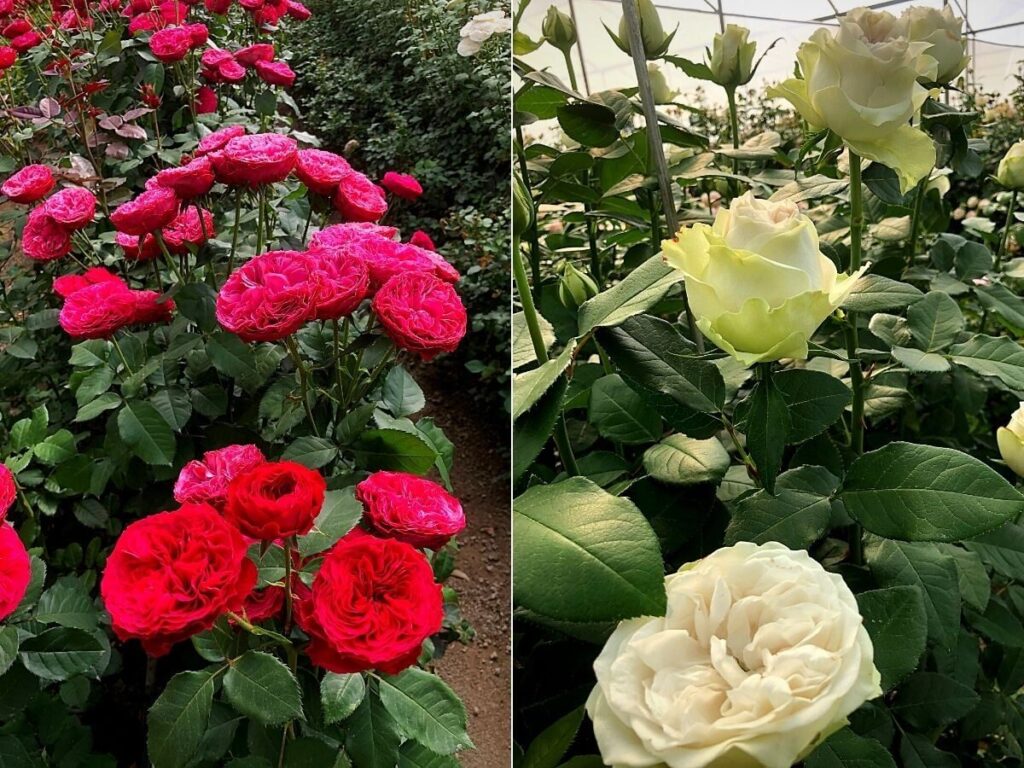
Featured image: roses shown at earlier Nini Flowers breeder open days in Naivasha. This is an archival image of the grower’s rose varieties, not a photograph of the AgriSfeer Scout app or a measurement of its impact. Image source: Thursd / Nini Flowers.