

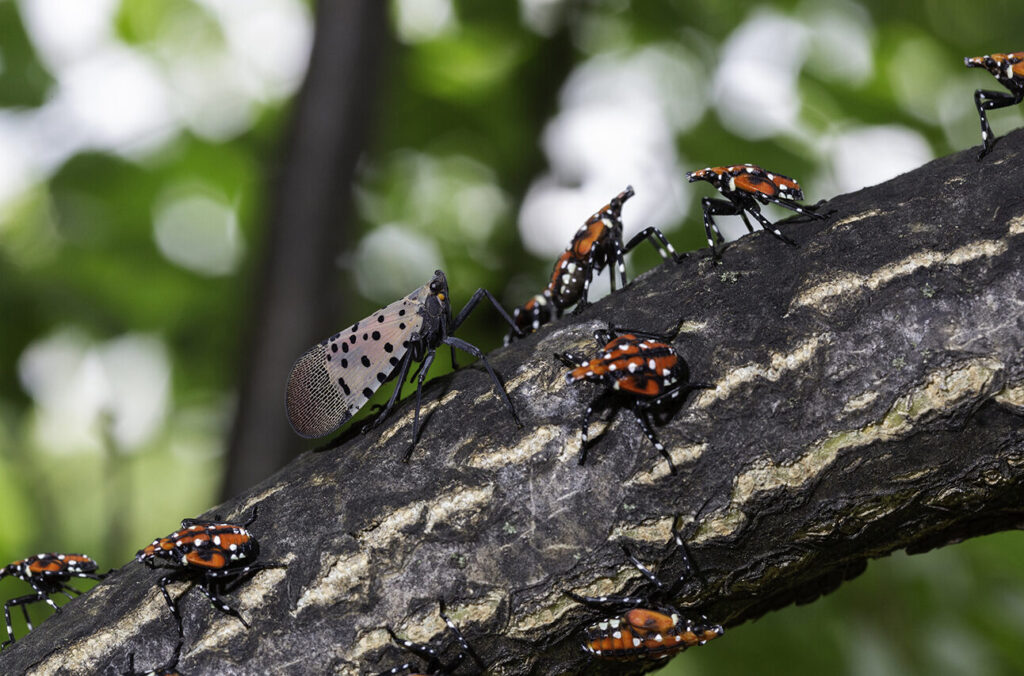
Canada has designated Essex County, the city of Windsor, the township of Pelee and the municipality of Chatham-Kent in Ontario as a regulated area for spotted lanternfly, after confirming an established reproducing population. The Canadian Food Inspection Agency (CFIA) announcement of 23 October 2026 creates immediate precautions for businesses moving plants, equipment and other goods out of the region.
Everything moving from the regulated zone into a non-regulated Canadian area must be free of all life stages of the pest, including eggs. The measure covers woody nursery stock, but also objects such as vehicles, packaging, outdoor equipment and firewood that may carry insects. It is a pest-freedom rule, not a general prohibition on selling greenhouse vegetables.
Woody nursery shipments face a second deadline
CFIA’s updated directive D-24-01 has an overall effective date of 23 October. Its separate domestic movement-certificate requirements for woody nursery stock moving from the regulated zone to other areas of Canada take effect on 11 January 2027.
For those shipments, the directive provides CFIA-issued Movement Certificates based on official inspection, production in approved pest-excluding structures or an accepted systems approach. Its woody-plant scope includes propagative trees, vines and shrubs; growers should not confuse it with a blanket new certificate requirement for harvested tomatoes or peppers.
Why greenhouse and nursery operators should watch
The regulated area overlaps an important Canadian protected-horticulture and nursery production region. Operators shipping eligible plant materials will need to assess pest monitoring, outbound checks and the evidence required for certification. Businesses should consult CFIA on the procedures applicable to their own plants and shipments rather than assuming one rule covers every crop.
The agency reports that spotted lanternfly feeds on many plant species but says substantial direct feeding impacts have so far been observed mainly on grapes. The new rules do not establish damage to commercial greenhouse vegetable crops. An official international pest report records the outbreak as the first established Canadian population under official control.
Key takeaways
- Outbound items from the designated Ontario zone must be free of spotted lanternfly, including its eggs, from 23 October 2026.
- Additional CFIA Movement Certificates for domestic movements of woody nursery stock are scheduled for 11 January 2027.
- The rules are primarily a plant-health and logistics signal; confirmed widespread damage to greenhouse vegetable production has not been reported.