

Royal FloraHolland (RFH) is working with flower growers, buyers and software providers on additional logistics measures for the spring 2027 trading peaks at its Aalsmeer hub in the Netherlands. The options include reducing small auction transactions, redirecting some inbound flower flows and starting order picking earlier. These are proposals under consultation, not restrictions already introduced. The cooperative’s 17 November statement was reproduced by BPnieuws.
RFH expects to develop the package with market participants over roughly two months. The additional actions would be triggered selectively if transaction forecasts show that existing peak arrangements cannot maintain predictable deliveries to buyers’ boxes. Final thresholds, scope and instructions have not been set out.
Three operational options for the Aalsmeer spring peak
The first option would reduce the number of clock-auction and clock pre-sales (KVV) transactions on the busiest days. Possible mechanisms described in the translated account of the RFH statement include larger minimum purchase quantities, tighter pre-sales shares or shorter buying windows. None of these specific limits has been announced as a binding new rule.
A second option is to restrict inbound supply to Aalsmeer or redirect selected deliveries to other RFH hubs. A third is to move picking and dispatch earlier, potentially including Sunday preparation, pre-auction picking and earlier morning delivery for pre-sales orders. Changes could affect carrier bookings, grower packing processes and Floriday-connected order workflows, depending on what is eventually adopted.
More transactions from smaller flower orders
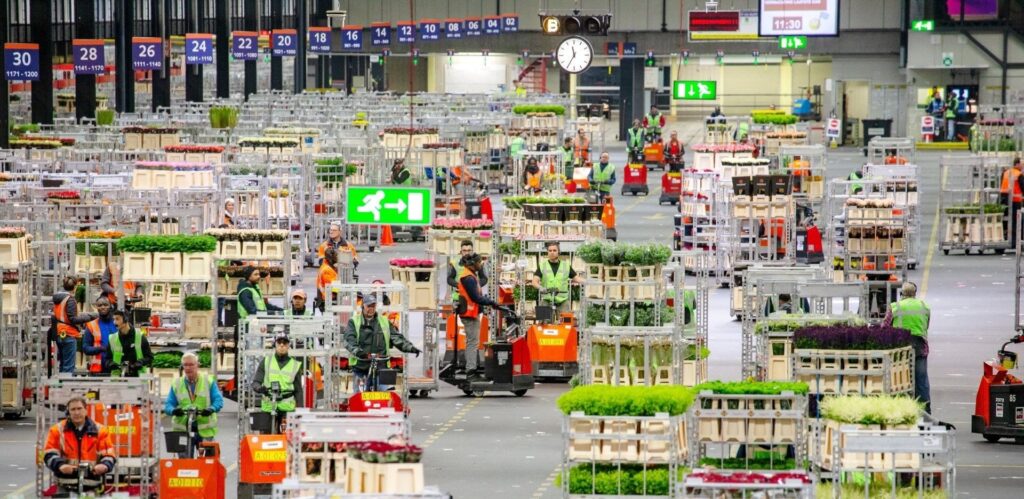
The operational pressure comes from increasingly fragmented flower purchases: a single inbound trolley can produce many more transactions and individual handling actions. In its statement, RFH says more than 80,000 daily transactions, even with all available staff and space deployed, makes completing every Aalsmeer flower delivery by 14:00 impractical. This figure describes a high-volume operating condition, not a newly imposed 80,000-transaction ceiling.
For the ten busiest days, the provisional delivery-time planning reference is 15:00. RFH is still discussing the service commitment with buyers, so neither time should be interpreted as a newly guaranteed customer deadline. An earlier first-party review of the 2026 spring peak had already documented Aalsmeer’s capacity pressure and the extra logistics work created by fragmented transactions. That earlier report supports the background, not confirmation of the new November proposals.
What growers and buyers should watch
For commercial floriculture operators, the important question is whether the consultation changes minimum order quantities, KVV availability, which hub receives incoming trolleys, or the time at which orders must be ready for collection. Those decisions could shift transport, packing and wholesale fulfilment schedules during Mother’s Day and other spring peaks. RFH says any additional measures would be communicated in advance if forecasts warrant their use.
The exact trigger levels, affected participants, mandatory label specifications and final implementation dates remain unresolved. Growers, buyers, hauliers and software-integrated suppliers therefore have an early planning signal, not a final operational notice.
Key takeaways
- RFH is consulting on three groups of possible Aalsmeer measures for the 2027 spring peak; the proposals are not yet binding.
- The stated pressure above 80,000 daily transactions concerns service capacity, not a new transaction cap.
- Changes to order size, hub routing and picking times could affect growers and buyers, but implementation terms remain to be decided.
Featured photograph: archival Royal FloraHolland auction-floor logistics view. Illustrative operational context; the image does not document the proposed 2027 measures. Photo: Royal FloraHolland.