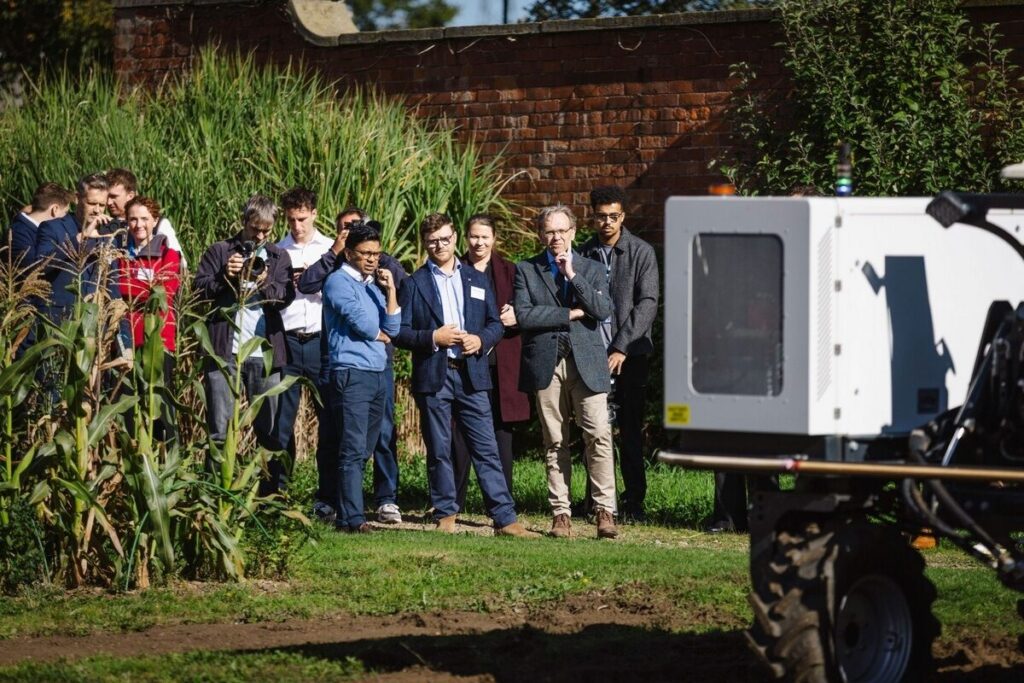
The UK government launched a network of robotics adoption hubs on 9 October 2026, including HARVEST at the University of Lincoln. The Lincoln hub will provide testing environments and technical assistance for robotics across fruit and vegetable production, arable farming and food manufacturing. Its role is to help companies assess and adopt technology — not to report robots already deployed in commercial greenhouses.
According to the government launch announcement, the eight hubs together are backed by £40 million. That national figure is not the funding allocated to Lincoln alone. The UKRI robotics adoption programme is intended to help organisations understand, test and integrate robotics rather than fund only early-stage research.
Lincoln hub combines testbeds with adoption support
A University of Lincoln announcement, reproduced by HortiDaily, attributes £4.8 million of funding to a total HARVEST investment of £7.1 million. The same university account describes a £500,000 robot test track at Riseholme Park and a £1 million Acceleration Fund intended to help UK agri-food robotics businesses address barriers to adoption. Those project-specific figures come from the university’s statement, not the government’s £40 million national total.
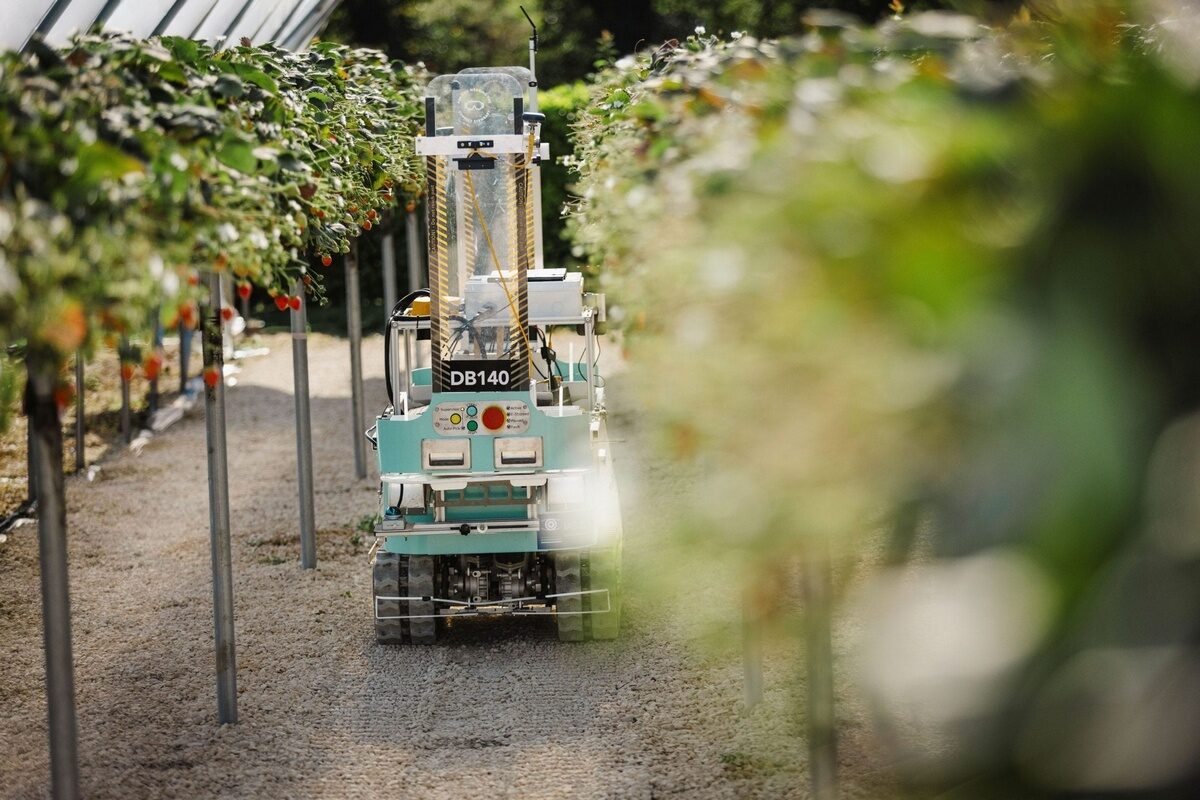
HARVEST is expected to connect research and demonstration facilities with the commercial work of robotics developers, growers and food businesses. The university identifies Saga Robotics, Dogtooth Technologies, Dynium and JABAS AI among the technology partners, with British Berry Growers among the sector organisations involved.
Relevance for protected-fruit production
For greenhouse and protected-soft-fruit businesses, practical demonstrations could help evaluate machinery for harvesting, handling and labour-intensive crop work before committing to procurement. British Berry Growers’ participation provides a clear connection to commercial berry production, but HARVEST has a wider remit than greenhouse horticulture alone.
The launch establishes a support and testing infrastructure. It does not establish a commercial grower’s robot adoption, verified labour savings or an independently measured harvesting benefit. Project-specific eligibility criteria and the timetable for individual business support will need to be checked when HARVEST publishes application details.
Key takeaways
- HARVEST in Lincoln is one of eight robotics adoption hubs launched under a £40 million national announcement.
- The University of Lincoln reports a £7.1 million HARVEST package, including £4.8 million of secured funding and a £1 million business support fund.
- Fruit and vegetable testbeds and British Berry Growers’ involvement make the initiative relevant to protected horticulture, but no new commercial greenhouse robot deployment has been documented.