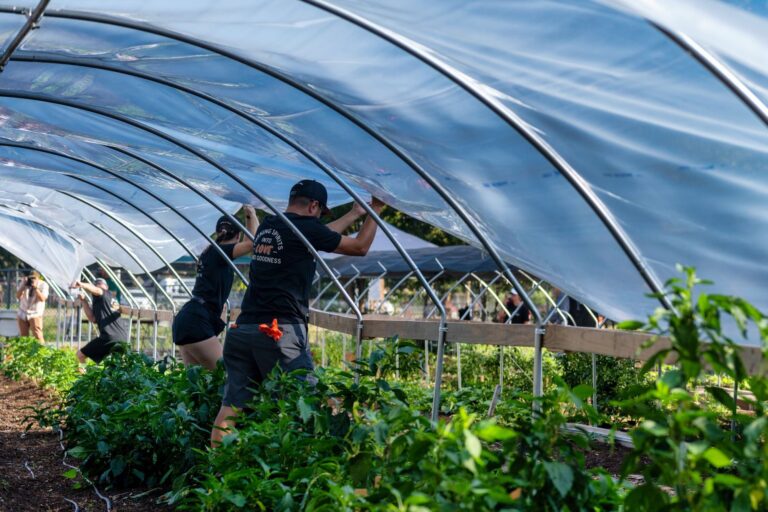


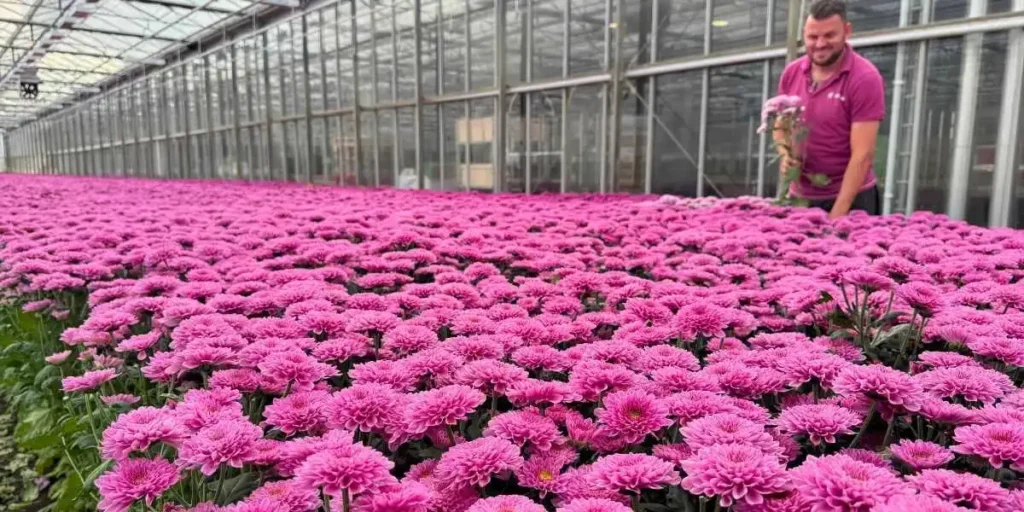
Leen Middelburg Chrysanten is testing whether oxygen-enriched irrigation water and soil-microbe treatments can help growers reduce their reliance on annual soil steaming. The commercial-scale research at its MidMad site in Made, the Netherlands, has been running across six hectares of chrysanthemums since August 2026. It is an active experiment, not proof that steaming or chemical treatments can already be eliminated.
The programme brings together the grower, horticultural supplier Royal Brinkman and research organisation Vertify. Vertify’s project description identifies the consortium and its two research approaches: oxygen- or air-enriched irrigation using nanobubble generators and biological products intended to improve soil and plant resilience.
A six-hectare comparison of irrigation treatments
According to BPnieuws’ 27 October reporting with the project team, the trial comprises two three-hectare sections. One receives nanobubbles generated using ambient air, containing around 21% oxygen, while the other uses concentrated oxygen from a generator, at approximately 93% oxygen. These percentages describe the gas used for treatment, not a measured oxygen concentration in plant tissue or irrigation water.
Moleaer nanobubble equipment supplies the irrigation treatments. Soil sensors are tracking water infiltration and related conditions down to 60 centimetres; samples and observations are being gathered alongside assessments of the crop and root zone. Various beneficial fungal and bacterial products are also being investigated, with the intention of improving plant resilience against root-damaging nematodes.
Why growers are testing an alternative to steam
Soil steaming is used in ground-grown chrysanthemums to suppress parasitic nematodes, which can damage roots and leave plants uneven or weak. The process requires heat, labour and a substantial energy input. The consortium wants to determine whether a better root-zone environment could reduce the need for that treatment without compromising crop performance.
Royal Brinkman’s project page dates the broader initiative to May 2026 and says an EIP innovation grant supported by the European Union was approved. The six-hectare operational comparison reported in October began later, in August; the dates therefore refer to different stages of the same programme.
Results are still needed before a commercial conclusion
The potential relevance for cut-flower businesses is considerable: successful soil-health management could affect heating demand, treatment costs and root-zone protection. But no verified savings, nematode-suppression rate, yield benefit or repeatable replacement for annual steaming has been established in the available project updates.
Growers will need the monitored trial results, including comparable crop-health and soil measurements, before assessing whether this combination can be adopted reliably elsewhere. The trial end date and final outcome figures have not yet been announced.
Key takeaways
- Leen Middelburg Chrysanten and its partners are running a six-hectare field experiment in Made, not announcing a proven new production method.
- The two three-hectare sections compare different oxygen sources for nanobubble irrigation alongside soil-biological treatments.
- Energy, nematode control and yield outcomes remain unquantified; the practical business case depends on measured results.