

China has introduced a nationwide framework for classifying land used by agricultural facilities, spelling out when greenhouses and seedling houses can remain under their existing land designation and when operators must complete a facility-farmland filing. The notice, issued jointly by the Ministry of Natural Resources, the Ministry of Agriculture and Rural Affairs, and the National Forestry and Grassland Administration, was signed on 24 October 2026 and made public in early November.
The official notice, No. 146 of 2026, and its accompanying land-use guide establish a positive list of permitted agricultural facilities. The distinction matters to commercial greenhouse developers because the classification depends on the structure’s effect on cultivated soil and its function—not simply on whether it is called a greenhouse.
Three routes for greenhouse-related land use
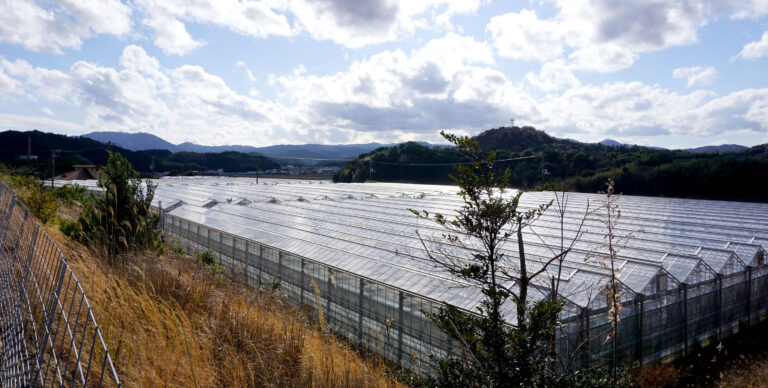
Greenhouses and nursery or seedling facilities built on farmland or orchard land can continue to be managed under the original land-use category when they directly support agricultural production and do not damage the cultivated soil layer. The guide says necessary production paths made with permeable paving or prefabricated slabs less than two metres wide inside greenhouses do not, by themselves, count as damage to that layer.
Production facilities or ancillary buildings that do disturb the cultivated soil layer, while directly serving agriculture, fall instead under the facility-farmland filing system. Facilities outside the national positive list require the separate approval procedures applicable to construction land. This is a classification and compliance framework, not a blanket exemption from land controls or an approval for any named project.
For projects requiring a facility-farmland filing, the guide sets out a process starting with submission to the township government, followed by review by county agricultural and natural-resources authorities. The national text also calls for provinces to publish more detailed lists, filing requirements and local standards.
Ancillary land and idle facilities come into focus
For crop-growing operations, the accompanying guide gives a reference limit for ancillary facilities of 5% of the overall site and no more than 10 mu (about 0.67 hectares). Those figures are national reference standards rather than a guarantee of the exact allowable area at every site: provincial authorities are responsible for defining applicable detailed limits, and the notice provides for context-specific treatment of some land types.
The policy also addresses unused facilities. For facility farmland, the notice provides for cancellation of filings in specified circumstances, including no construction within two years after filing or more than two years of idleness, subject to the relevant county determination. Greenhouse operations managed under the original farmland designation that cease operating for more than two years must remove the structures and restore the land in accordance with contractual arrangements. The government’s accompanying interpretation also stresses life-cycle oversight and land restoration.
Why it matters for greenhouse investment
For growers, propagation businesses and greenhouse developers planning new sites or extensions, the immediate decision is to check a project’s physical design against the positive list before assuming the land-use route. Foundations, paved areas and ancillary buildings may change the filing requirement even where the growing structures themselves preserve the soil. The framework therefore makes early land classification and local documentation a practical part of project planning and due diligence.
What remains unclear
The national notice does not establish the final, project-specific filing outcome or ancillary-space allowance for each province. Operators still need the forthcoming provincial rules and a review of their site’s land rights, design and existing approvals before treating a scheme as compliant. No individual greenhouse construction project is authorised by this notice alone.
Key takeaways
- Soil-preserving growing and seedling structures may remain under the original land-use classification; other agricultural facilities may require county filing or construction-land approval.
- The 5% / 10-mu ancillary-land figures are reference standards, with provincial implementation still decisive.
- Developers should check both new construction details and existing idle-site obligations against the relevant local rules.