

The Dutch House of Representatives adopted a motion on 10 November 2026 asking the government to design a capital-investment (CAPEX) subsidy for at least deep-geothermal projects before the Spring Budget 2027 debate. The vote sets a policy-design task; it does not establish a subsidy programme, commit public funds or open applications.
The parliamentary motion, 37020-XXIII-32, was submitted on 5 November. It asks ministers to work with the sector on an investment-support design that could be combined with the existing SDE++ renewable-energy support mechanism. Geothermie Nederland confirmed the motion’s adoption after the 10 November vote.
Upfront drilling costs are the focus
Deep-geothermal projects involve substantial capital spending before heat can be supplied, including drilling and surface infrastructure. Geothermie Nederland argues that a CAPEX instrument could help address those initial investment costs alongside SDE++, which supports renewable heat production. That is the sector association’s case for a complementary instrument, not evidence that a new grant has been funded or that project economics have already improved.
The association also points to an earlier parliamentary discussion of geothermal finance in March 2026. The November motion gives the government a more specific design request and a deadline tied to the next spring budget debate.
Why greenhouse developers should watch the next proposal
Commercial greenhouses are significant potential users of geothermal heat in the Netherlands, where energy supply and financing affect growers’ long-term investment decisions. For a greenhouse operator considering connection to a geothermal heat network, the important next questions are which projects and costs would qualify, how CAPEX assistance would interact with SDE++, and whether any eventual support would be accessible to its project partners.
The parliamentary vote does not earmark money for horticulture, guarantee financial support to a greenhouse or authorise any geothermal construction. Developers therefore cannot include a future CAPEX grant as committed financing on the strength of this motion alone.
What remains unclear
No programme budget, subsidy rate, eligibility criteria or application period has been adopted. The next verifiable milestone is a government scheme-design proposal before the Spring Budget 2027 debate; any subsequent programme and appropriations would require further decisions.
Key takeaways
- The House adopted a motion seeking a design for deep-geothermal CAPEX investment support, not an operating subsidy programme.
- The requested proposal would be developed with the industry and considered alongside SDE++ before the 2027 spring budget debate.
- Greenhouse energy investors must wait for concrete funding, eligibility and timing rules before treating the idea as financial support.
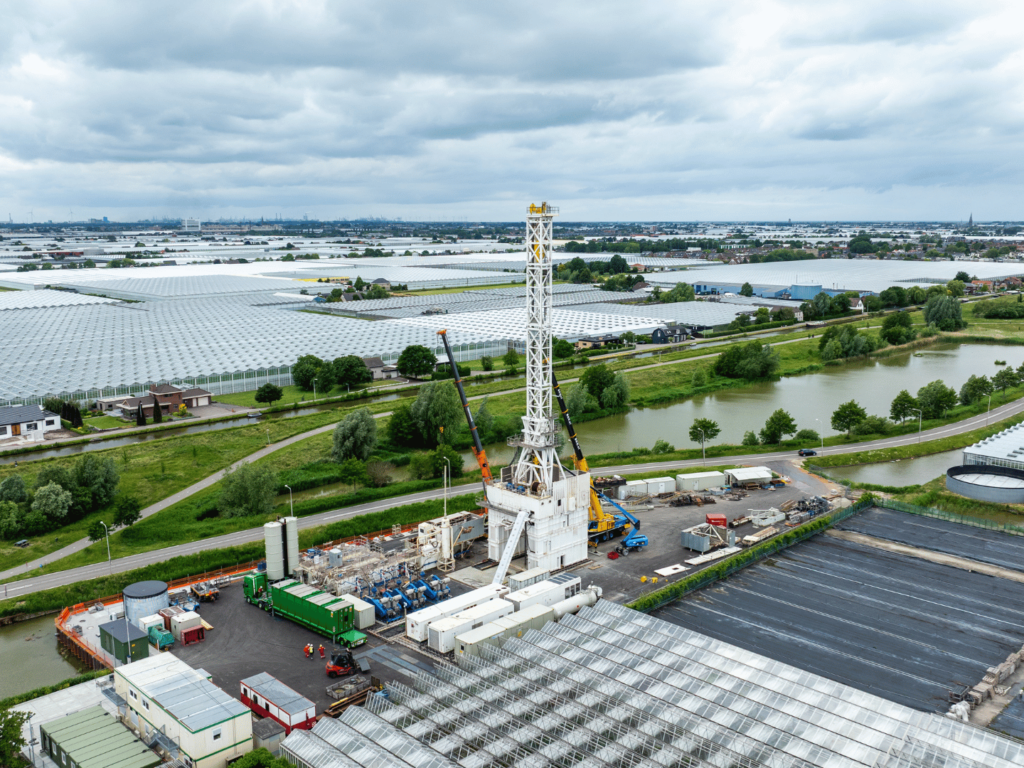
Featured image: Geothermal drilling at Wippolderlaan in Westland, Netherlands, June 2026. Archival sector context; the image does not depict the parliamentary vote or a project funded under the proposed scheme. Photo source: Aardwarmte Wippolderlaan.