

Commercial greenhouse and horticultural growers in Ontario’s Essex County have a new source of support for water-quality investments. The Essex Region Conservation Authority (ERCA) has launched a Greenhouse and Horticulture Water Quality Improvement Program to reduce nutrient losses from greenhouse production and related land management. The programme was operating by October 2026, according to a 12 November report based on direct interviews with ERCA personnel and Ontario Greenhouse Vegetable Growers.
That original reporting says the highest-cost-share category may cover 75% of eligible spending, up to C$40,000, for certain fertigation and water-treatment improvements, plus specified equipment changes for crop-residue handling. These are reported programme terms, not a blanket grant entitlement: an official greenhouse-specific application sheet, available budget and final eligibility conditions were not independently confirmed in the public documents reviewed. Growers should check the current conditions directly with ERCA before ordering equipment.
Equipment upgrades and runoff control are the focus
ERCA’s agency-attributed programme announcement identifies two related goals: more efficient use of nutrients inside greenhouses and reduced losses from nutrient feedwater and greenhouse crop residues after they leave production systems. Eligible project types described include better fertigation monitoring, control of nutrient concentrations, pretreatment of surplus irrigation solution, improvements to application equipment and water-management infrastructure.
Outside the greenhouse, the programme also supports measures such as vegetated strips along waterways, perennial ground cover where nutrient solution or crop residues are applied, grassed waterways and erosion-control work. These are potential areas for grower investment, not proof that any named greenhouse has already installed or received funding for a specific system.
Greenhouse nutrient feedwater is commonly recirculated. However, end-of-crop changeovers, treatment failures and imbalanced nutrient concentrations can leave solutions that cannot readily be reused. In Essex County, disposal options and the risk of nutrients reaching local waterways make recovery, treatment and field-application controls a practical operating issue.
Why the Essex greenhouse region is targeted
The Leamington–Kingsville area has a large concentration of commercial greenhouse vegetable production. ERCA says greenhouse-influenced watercourses have shown elevated phosphorus concentrations compared with other monitored streams, and its programme links investment support with efforts to reduce nutrient contributions to Lake Erie and Lake St. Clair. Its watershed work provides background on monitoring and stewardship, while the dedicated greenhouse scheme adds sector-specific measures.
The funding sits within conservation efforts supported by the Canada Water Agency’s Great Lakes Freshwater Ecosystem Initiative, according to the authority-attributed release. ERCA’s official stewardship and grants page provides a direct route to its staff and its broader 2026 cost-share activity; it should not be treated as confirmation of the specific C$40,000 ceiling or of an application approval for an individual grower.
Business implications for growers and suppliers
For commercial operators considering nutrient sensors, dosing controls, treatment equipment or runoff works, the new programme may change the economics of an upgrade by sharing part of the initial cost. For suppliers, it identifies local demand for water-efficiency and nutrient-management technologies, but it does not amount to procurement awards or an announced order book.
Applicants need to confirm project eligibility, documentation, co-funding, timing and whether spending may begin before approval. The original reporting quotes ERCA water-quality scientist Katie Stammler on the need for practical solutions; it also indicates a limited number of growers had expressed interest soon after launch. That is early interest, not a measure of adoption or environmental performance.
What remains unclear
An authoritative greenhouse-specific programme guide, firm application deadline, funding remaining and precise conditions for individual project categories were not verified from ERCA’s public material reviewed. Nor is there evidence yet of quantified nutrient reductions attributable to grants awarded under the new scheme. Those are the next facts for prospective applicants and equipment suppliers to monitor.
Key takeaways
- ERCA’s new greenhouse-focused water-quality grant programme was already operating by October 2026 in Essex County, Ontario.
- Original reporting describes up to 75% cost sharing and a C$40,000 ceiling for certain eligible upgrades; applicants should confirm terms with the authority.
- Potential projects span fertigation monitoring and treatment, nutrient-feedwater management, vegetated buffers and related runoff controls.
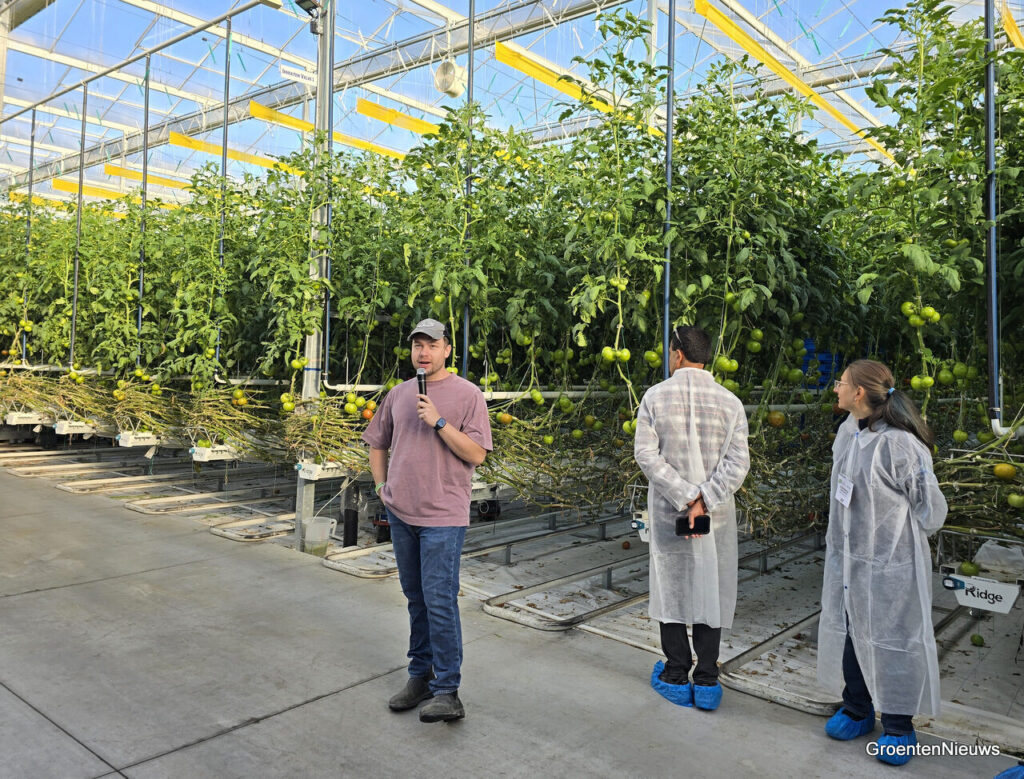
Featured photo: A commercial greenhouse at Ridge Farms in Kingsville, Essex County, photographed during the 2026 Canadian Greenhouse Conference tour. Regional industry context only; it is not identified as a grant recipient or funded installation. Photo: Thijmen Tiersma / HortiDaily.