

Dutch tomato producer Bryte is operating an 11 MWh battery energy storage system at its 8.3-hectare greenhouse site in ‘s-Gravenzande, according to a project case study from system integrator Stolze. The installation combines several battery units with the grower’s grid connection and solar generation, rather than relying on a single large storage enclosure.
The installation is not a new November commissioning. Supplier Aquasol Solar announced the planned 11 MWh build in March 2026 and held a construction-stage open afternoon in June. Battery manufacturer Sigenergy reported commissioning on 1 August 2026. Stolze’s recently circulated case study adds detail about how the operating project was designed.
Four suppliers integrated storage into a constrained site
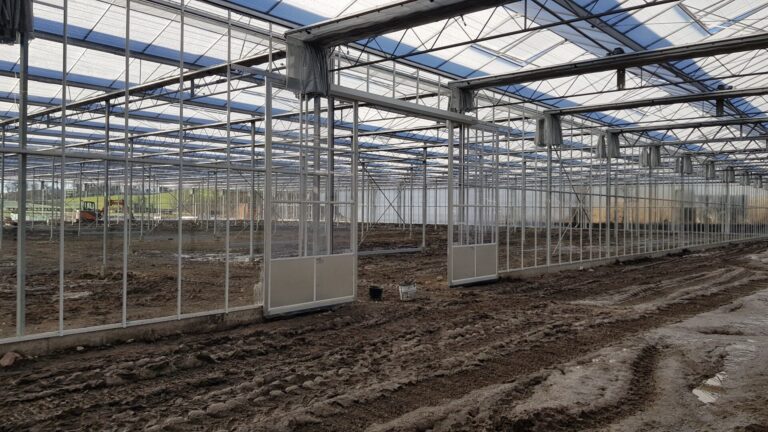
The partners had to accommodate 11 MWh of battery capacity within the available land while meeting a specified 10-metre distance from building façades for fire-safety planning. Instead of grouping all units in one place, they distributed modular installations around the site and coordinated the electrical routes. Stolze says the layout required assessing AC and DC cabling alongside the available space.
Stolze coordinated system integration; Anexo handled medium-voltage equipment and transformers; and Aquasol Solar supplied the battery installation. Energy-management specialist Samax prepared a feasibility study and, according to the integrator, now manages daily battery operation. These roles illustrate the engineering and control interfaces that must be resolved before storage can operate at a commercial greenhouse.
Seasonal lighting drives the energy-storage case
Bryte co-owner Tom Zwinkels told Stolze that the business uses its substantial electricity grid connection intensively for grow lighting during roughly six months of the year. The connection’s infrastructure costs continue outside that period, while rooftop solar generation can coincide with low electricity sale prices.
On-site storage gives the grower a way to shift some electricity use over time and respond more flexibly to market conditions. It can also support control of peak loads, but the case study does not independently establish how frequently Bryte uses each service or the financial benefit it receives.
What other greenhouse operators can learn
The relevant benchmark is a documented operating installation at a named commercial tomato grower, with storage, grid equipment and trading controls planned together. Its 11 MWh figure describes energy-storage capacity, not instantaneous power output, annual savings or electricity produced.
Neither the project partners’ accounts nor the manufacturer’s announcement disclose a verified capital cost, payback period or independently measured annual savings. Those figures, along with operational performance across lighting and non-lighting seasons, remain the next evidence needed to assess replicability and returns at other greenhouse sites.
Key takeaways
- Bryte’s 8.3-hectare Dutch tomato site has an 11 MWh modular storage installation, with manufacturer-reported commissioning in August 2026.
- Distributed battery placement and coordination between storage, medium-voltage equipment and control providers were central to the design.
- No verified project payback or realised annual cost savings have been disclosed.
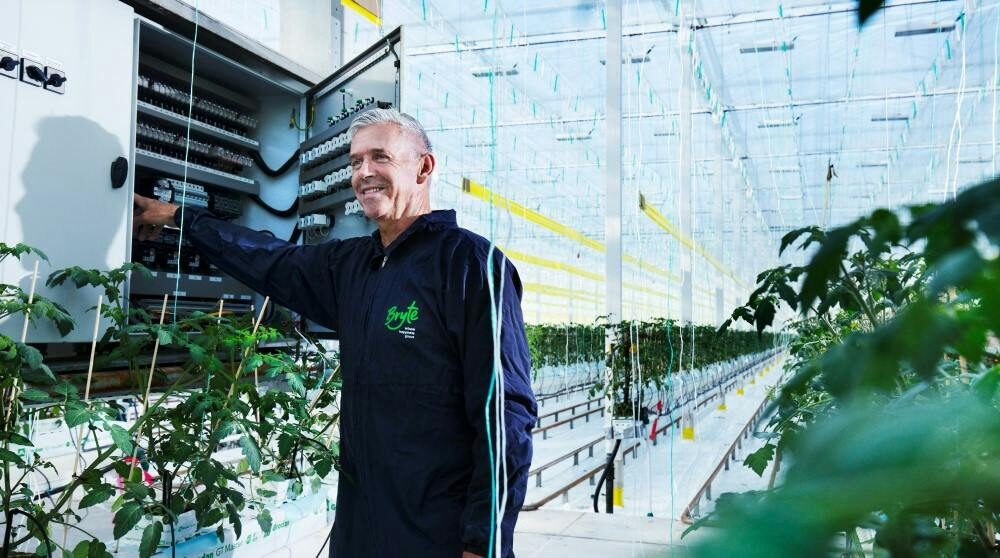
Featured image: Archival Interpolis photograph of an electrical inspection inside a Bryte tomato greenhouse. It does not show the 2026 battery installation. Original source.