

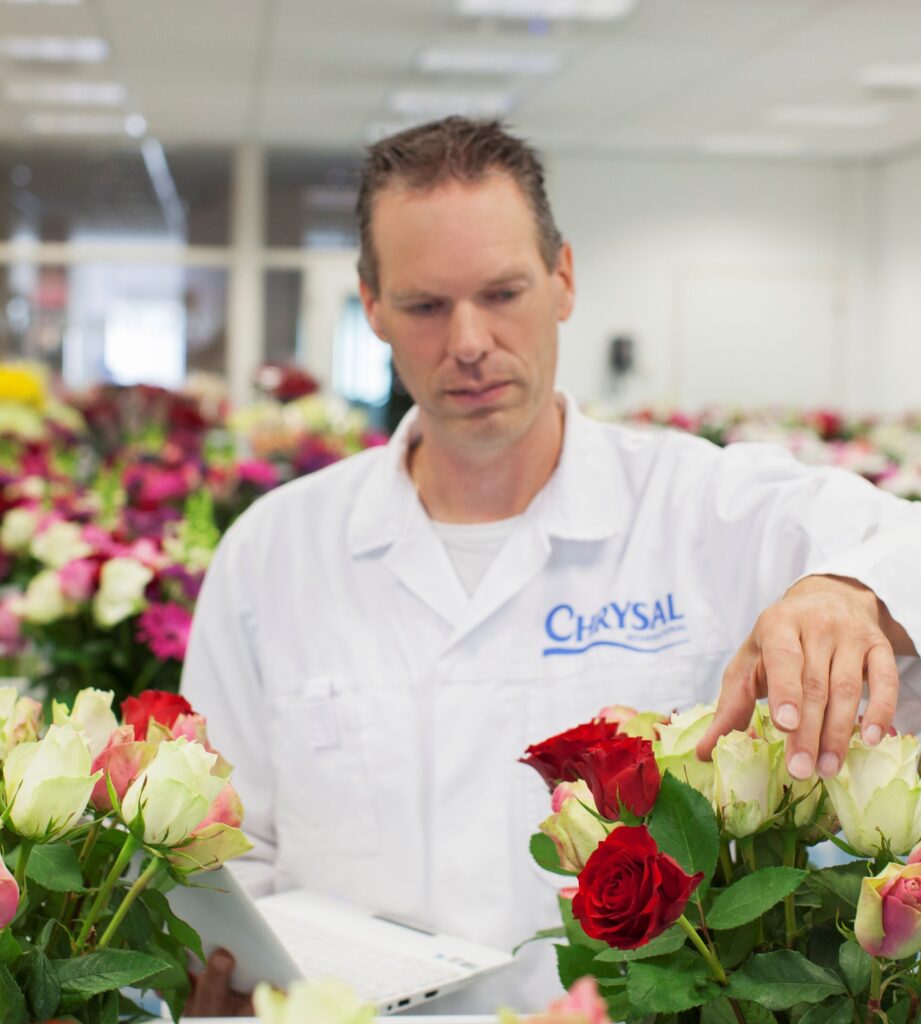
Chrysal Africa and Lima Labs AI are offering Vase Life AI, a subscription service intended to help commercial rose growers identify Botrytis and short vase-life risks before harvest. The offer is described in a 2 November 2026 interview with Chrysal Africa general manager Niels van Doorn, while Lima Labs lists the product among its flower-growing solutions. Neither source establishes that the system has already delivered measurable savings or better vase life in grower trials.
Predictions draw on greenhouse and postharvest data
According to Van Doorn, the model combines greenhouse climate conditions, crop growth stages and past spray applications with quality assessments of harvested roses. It is designed to highlight the risk of grey mould caused by Botrytis and of reduced vase life while the crop is still growing. The company says this could allow growers to act before a quality problem becomes visible at dispatch.
The proposed decisions are practical rather than purely analytical: the service is intended to help determine whether to spray a particular greenhouse, defer a treatment or apply a suitable postharvest dip. Lima Labs’ product description also refers to temperature, stem density, crop health, risk alerts and recommendations. These are descriptions of the product’s intended functions, not independently verified measures of diagnostic accuracy.
A subscription offer ahead of operational trials
Van Doorn said the prediction model had been trained on data from many rose stems and that setting up the service at an individual grower’s operation takes approximately one month. Chrysal offers Vase Life AI as a subscription, but the interview did not disclose the price, name an installed paying customer or establish the exact date commercial access began.
The next stated step is to examine what happens when growers make decisions using the predictions. Planned assessments cover spray frequency, flower quality, vase life and costs. Until those results are available, reductions in chemical use or waste should be treated as objectives rather than demonstrated outcomes. The product’s initial focus is roses, and the companies expect additional varieties and locations to inform further model development.
Why it matters for commercial rose growers
For greenhouse managers, a credible advance warning of quality risk could change how individual growing areas are monitored and treated. This matters particularly where flowers face long supply chains and quality decisions must be made before export. It could also create a new recurring software and data-service cost, so the relevant procurement question is whether validated predictions improve decisions enough to justify subscription and implementation expenses.
Chrysal’s wider Intelligence initiative aims to connect technical support, growing data and postharvest quality information. The greenhouse-specific value proposition is more targeted treatment and more predictable cut-flower quality, but the reported development remains an offered service awaiting independently reported field outcomes.
What remains unclear
Publicly reported information does not yet establish the model’s predictive accuracy across different rose varieties and greenhouse conditions, the number of paying installations, the subscription price or the effect on grower margins. A useful next signal would be a named commercial trial with baseline and measured changes in Botrytis incidence, spray use, marketable flower quality, vase life and total cost.
- Current stage: A subscription service is being offered; measured field results are pending.
- Intended use: Greenhouse-specific quality-risk predictions and treatment guidance for roses.
- Decision still open: Whether operational benefits justify data, setup and subscription costs.