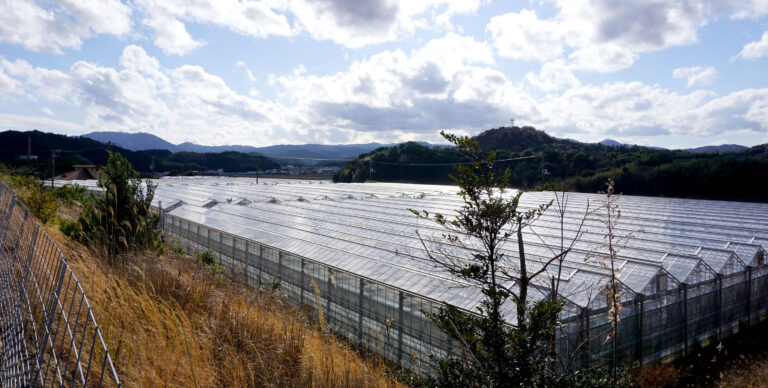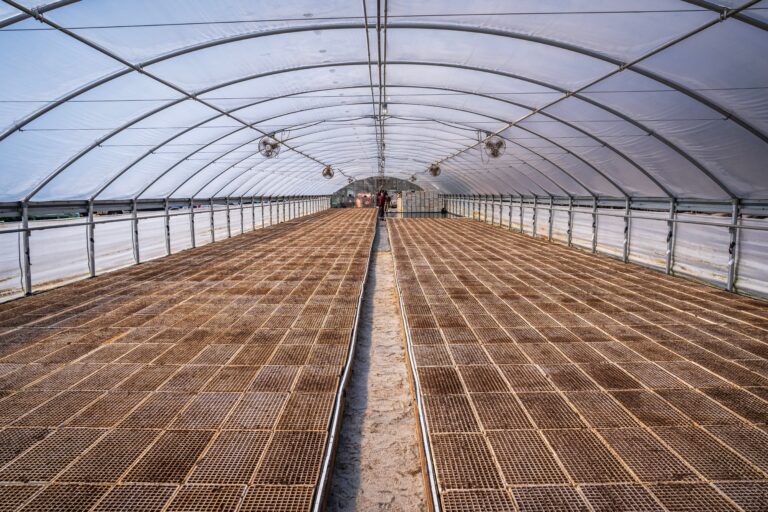


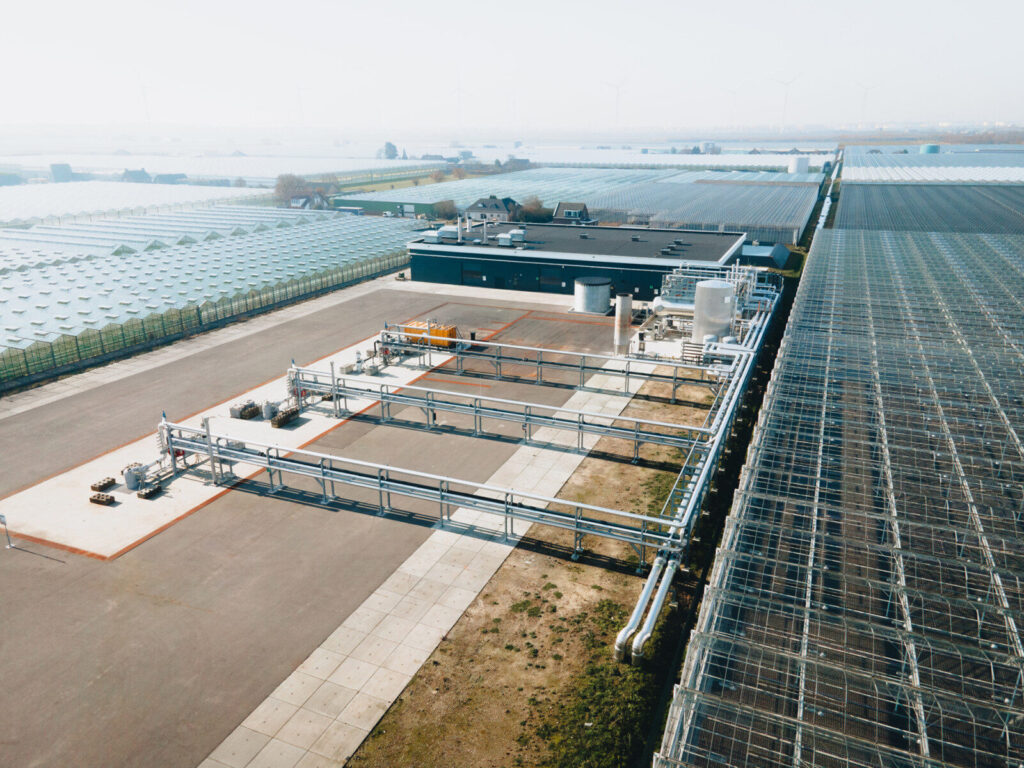
The Dutch government has not yet released €200 million set aside to improve the conditions for the greenhouse sector’s energy transition. In a letter sent to parliament on 3 November 2026, State Secretary for Agriculture Silvio Erkens said the conditions attached to the allocation have not yet been met. The money remains reserved in the Climate and Energy Fund; it has not been cancelled or awarded to individual growers.
The statement gives greenhouse operators and energy-infrastructure developers a clear distinction between a budget allocation and money available for investment. The letter does not set a release date for the €200 million.
Renewable heat forecast falls short of the earlier benchmark
The government’s accompanying progress report expects around 21 petajoules (PJ) of renewable heat in 2030, compared with the roughly 30 PJ considered necessary when the sector’s 2022–2030 energy-transition agreement was drawn up. Its current outlook includes more than 12 PJ of geothermal heat, less than 4 PJ of industrial residual heat and less than 6 PJ from biofuels and solar energy.
The previous ambition of 15 PJ of geothermal heat by 2030 is also now considered out of reach, according to the letter. These figures are government projections, not measured heat supplies for 2030. The progress review concludes that growers have fewer practical decarbonisation options than initially envisaged.
Energy-tax and ETS2 decisions extend into 2027
The government says its proposed 2027 tax package would compensate greenhouse businesses for the additional cost of the green-gas blending obligation through a reduction in energy tax. By spring 2027, it also intends to decide the level of compensation associated with a possible inclusion of the sector in the EU’s second emissions trading system, ETS2, and how green-gas compensation should continue. Those future decisions are not presented as enacted long-term rules.
Erkens also indicated an intention to extend the existing Energy Efficiency Greenhouse Horticulture (EG) and Market Introduction Energy Innovations (MEI) support schemes through 2031. That planned extension is distinct from the €200 million allocation whose release conditions remain unmet.
What growers and suppliers should watch
For greenhouse operators considering geothermal connections, alternative heat or electrification, the immediate implication is that the reserved €200 million should not be treated as accessible funding. Infrastructure timing, future energy costs and the proposed compensation framework remain important inputs to project budgets. The next material policy checkpoints are the government’s 2027 spring decisions and any later confirmation that the funding conditions have been satisfied.
Key takeaways
- The Dutch government says €200 million remains earmarked for greenhouse energy-transition conditions but has not yet been released.
- Its 2030 renewable-heat projection is about 21 PJ, below the roughly 30 PJ previously considered necessary.
- Important ETS2 and energy-tax compensation decisions are expected by spring 2027, rather than being settled by the November letter.