

The Dutch government presented its Nota Ruimte national spatial vision on 16 November 2026 and sent it to parliament, setting out how competing demands for housing, energy, industry, agriculture, water and nature should be accommodated towards 2050. For commercial greenhouse operators, the immediate signal is a policy preference for development in existing production clusters rather than confirmation of any individual greenhouse project.
The government’s announcement describes the plan as the country’s new national environmental vision under the Omgevingswet, binding on the national government and guiding other public authorities. It also looks ahead to 2100. The document’s implications for horticulture were detailed in a 17 November response from Glastuinbouw Nederland, the Dutch greenhouse growers’ association.
Existing greenports remain the focus
Glastuinbouw Nederland says the strategy explicitly supports a strong, innovative greenhouse sector concentrated in established greenports and other greenhouse clusters. The association welcomes recognition of restructuring, more intensive use of existing growing areas and sufficient relocation space for businesses that need to modernise or move.
Clustering matters beyond land allocation. Shared greenhouse districts can offer a more practical setting for energy, heat and carbon-dioxide networks, while also allowing growers and infrastructure providers to coordinate investment. These are planning and sector-development arguments made by the association, not measured benefits or newly funded projects announced by the cabinet.
The 2027 implementation work is the next test
The association says the national vision does not yet provide the practical instruments required for greenhouse relocation and modernisation. It calls for clearer land policy, financing and conditions for affordable energy, CO₂, heat and water, and wants to work with the ministry, greenports, provinces and municipalities on an implementation strategy in 2027.
That distinction is material for investors and project developers. A national preference for greenhouse clusters does not identify a permitted site, guarantee access to a heat network, approve a relocation or award funding to a grower. Local spatial decisions and the economics of infrastructure connections still need to be established.
What greenhouse businesses should watch
Operators considering expansion or relocation will need to follow how provincial and municipal spatial plans translate the national direction into specific land-use opportunities. Suppliers and network developers should watch for concrete implementation measures covering electricity, heat, CO₂ and water, and for evidence that financing and site access can support actual investment decisions.
The cabinet’s spatial vision provides the policy framework; the sector’s requested 2027 implementation programme remains a next step, not a completed delivery mechanism. The key commercial question is whether those subsequent decisions make investment and modernisation feasible at particular greenhouse clusters.
Key takeaways
- The government presented its Nota Ruimte on 16 November as a national spatial vision towards 2050, not a set of individual greenhouse permits.
- Glastuinbouw Nederland says the policy favours established greenports and coordinated greenhouse clusters.
- Land instruments, infrastructure conditions and financing still require further work, with the association calling for a 2027 implementation strategy.
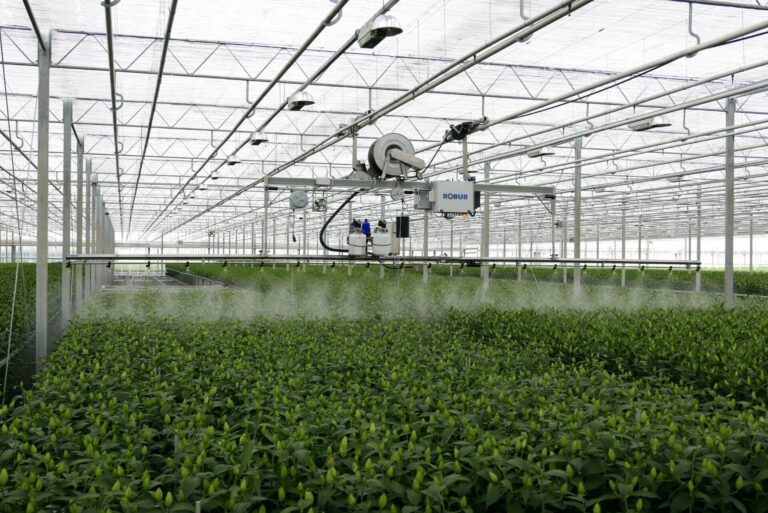
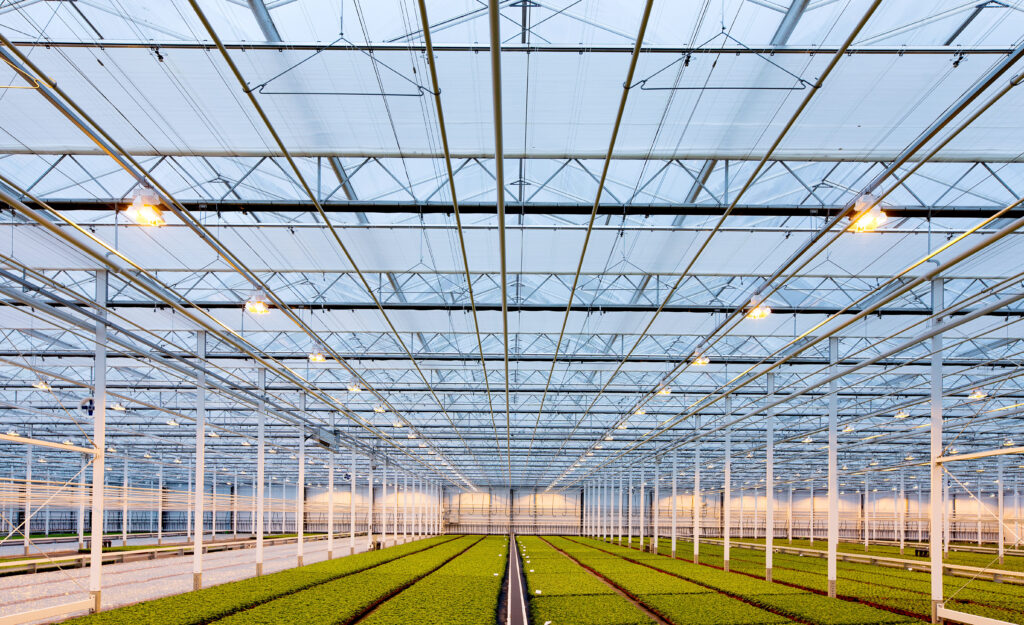
Featured photograph: Illustrative archival image of commercial Dutch greenhouse cultivation from Glastuinbouw Nederland’s press collection; it does not show a specific Nota Ruimte project or decision. Photo: Fotostudio GJ Vlekke.