

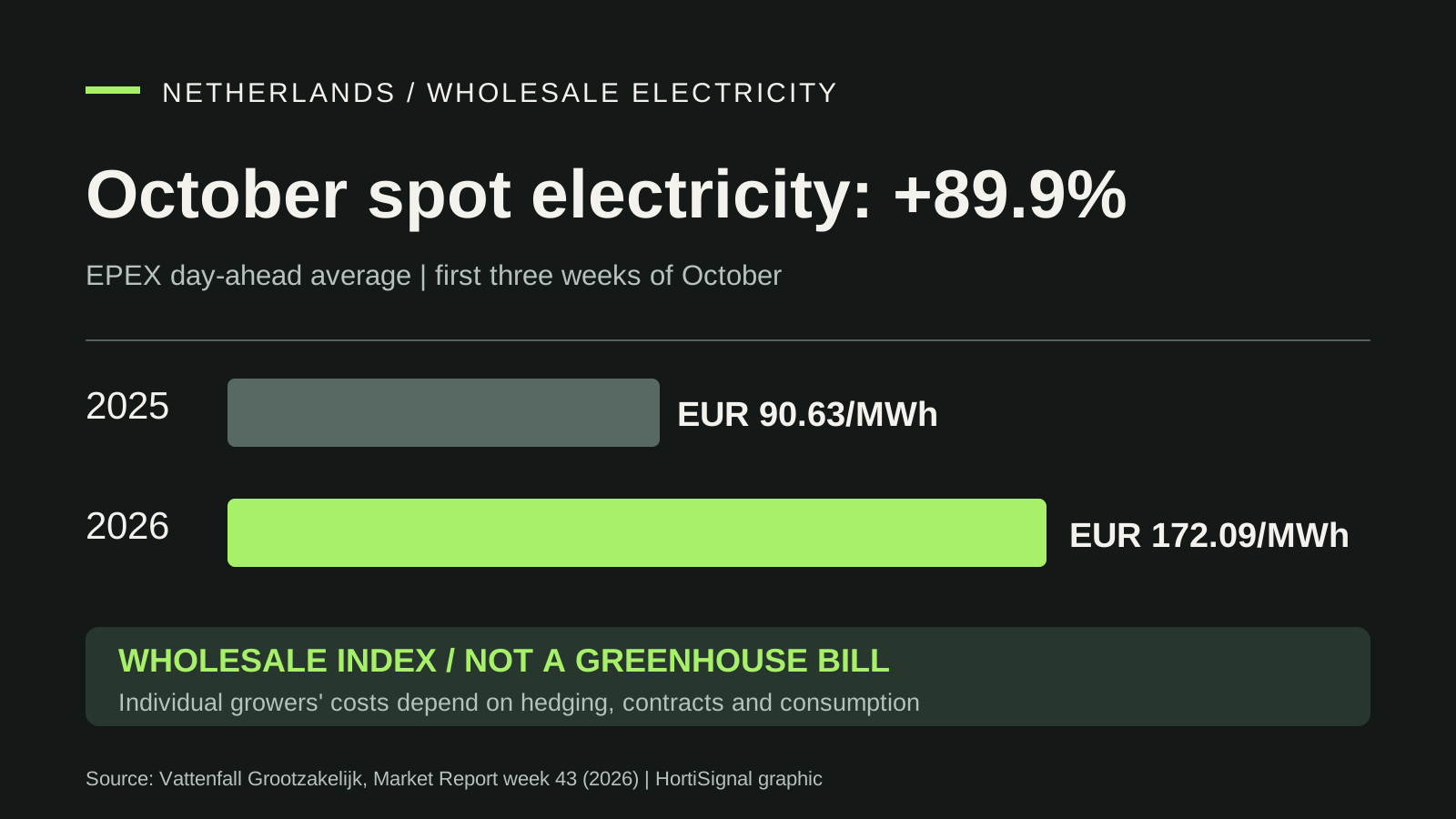
The average Dutch day-ahead electricity price in the first three weeks of October 2026 was nearly twice the level recorded over the same period a year earlier, according to Vattenfall’s week-43 energy market report. Its EPEX spot-market comparison shows EUR172.09 per megawatt-hour against EUR90.63/MWh in 2025, an increase of 89.9%.
The figure is a wholesale market average, not a measured 90% increase in greenhouse electricity bills. Commercial growers’ exposure depends on contract structures, purchased volumes, on-site generation, hedging and the hours in which they draw power.
What the spot comparison actually measures
Vattenfall compares the same three-week calendar window in October of each year rather than a complete October month or annual average. The numbers describe the Netherlands EPEX spot electricity market, where day-ahead prices respond to short-term supply and demand conditions. They should not be conflated with long-term forward contract prices or the all-in cost of electricity delivered to an individual operation.
The report identifies elevated natural-gas prices as an important contributor. When wind and solar output cannot meet demand, gas-fired generation may set the marginal electricity price; higher fuel costs can therefore feed through to spot power prices. The magnitude of the October comparison does not establish how much of the change came from any one factor.
Gas prices add another operating-cost signal
In the same report, Vattenfall says the Dutch TTF month-ahead gas contract briefly reached EUR90.24/MWh during trading on October 20, before ending that session at EUR85.06/MWh. The intraday peak and closing level are different observations; neither is the reported three-week EPEX electricity average.
Energy procurement is a material operating decision for Dutch commercial greenhouses, particularly where supplemental lighting, electrically driven equipment or heating add substantial demand. The market data indicate a potentially tougher spot-purchasing environment for exposed businesses, but growers with fixed pricing or different energy arrangements may experience materially different outcomes. For operators, the immediate questions are the amount of consumption linked to spot pricing and whether price volatility overlaps with peak production hours.
What to watch next
The full October average has not yet been established by this three-week report. Subsequent EPEX quotations, TTF gas prices, renewable generation and company-specific contract terms will determine whether current wholesale conditions persist and how they affect greenhouse cost structures. The Dutch horticulture energy update also identified the Vattenfall comparison as relevant to the glasshouse industry.
Key takeaways
- Dutch EPEX spot electricity averaged EUR172.09/MWh in the first three weeks of October 2026, versus EUR90.63/MWh in the equivalent 2025 window.
- The 89.9% increase is a wholesale-market comparison, not a direct measure of grower invoice inflation.
- Greenhouse cost exposure depends on contract and consumption profiles; the complete October average and subsequent energy prices remain to be seen.