Heat pumps kept a UK research greenhouse warm enough to grow strawberries during sub-zero outdoor temperatures, but their measured seasonal coefficient of performance (COP) averaged just 2.90. That is one of the findings from the GASTRO greenhouse research programme, which concluded in August 2026 and was described in GrowSave’s outcomes report, last reviewed on 8 October.
The project brought together the University of Lincoln, Pilkington NSG and NFU Energy to assess greenhouse heating and near-infrared (NIR) reflective roof glass. Its four-compartment demonstration glasshouse was designed to resemble commercial systems, but is much smaller than a normal producing greenhouse.
Heat delivery worked; efficiency fell short
The combined ground-source and air-source heat-pump system maintained crop-temperature setpoints in winter, including during periods of freezing outside conditions. However, the reported average COP of 2.90 was below the research team’s expectations. The authors point to possible heat loss in distribution pipework and baseline electricity consumption, and say additional metering will investigate these factors.
For growers, the distinction matters: successful winter temperature control does not itself establish lower operating costs. GrowSave also identifies electricity-grid standing and use-of-system charges and the cost of supplying greenhouse CO2 as obstacles to heat-pump adoption in UK horticulture.
Glazing changed vent operation, not proven CO2 savings
In summer, compartments fitted with NIR-reflective glass had roof vents about 4% less open than standard-glass controls. The north-facing NIR compartment produced 6.4% more first-class strawberries than its north-facing control; the two south-facing compartments differed by only 0.1%.
Those orientation-specific figures are trial observations, not a proven yield uplift for commercial greenhouses. The project did not measure a direct reduction in CO2 consumption from the changed ventilation, and the research team calls for further work on that question.
Next questions for growers
The findings provide an operating reference for heat-pump and NIR-glazing decisions, while leaving commercial-scale payback, electricity-network charges, pipe losses and CO2 supply unresolved. Future larger installations will need performance data under their own crop loads and energy tariffs rather than assuming this small trial’s COP or yield figures transfer directly.
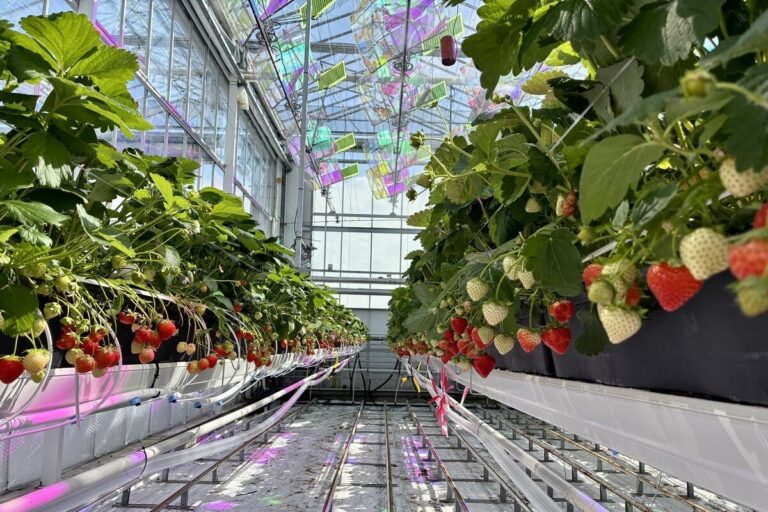
Featured image: University of Lincoln’s Riseholme research glasshouse, archival photograph; not an image of the measurement results. Photo: UK Food Valley.
Key takeaways
- The GASTRO research heat-pump installation maintained winter strawberry temperatures but returned an average COP of 2.90, below the team’s expectations.
- NIR-reflective glazing reduced summer roof-vent opening by about 4% in the four-compartment trial; first-class yield differences varied with orientation.
- Lower greenhouse CO2 use has not been demonstrated, and commercial-scale economics remain dependent on energy tariffs and system design.