

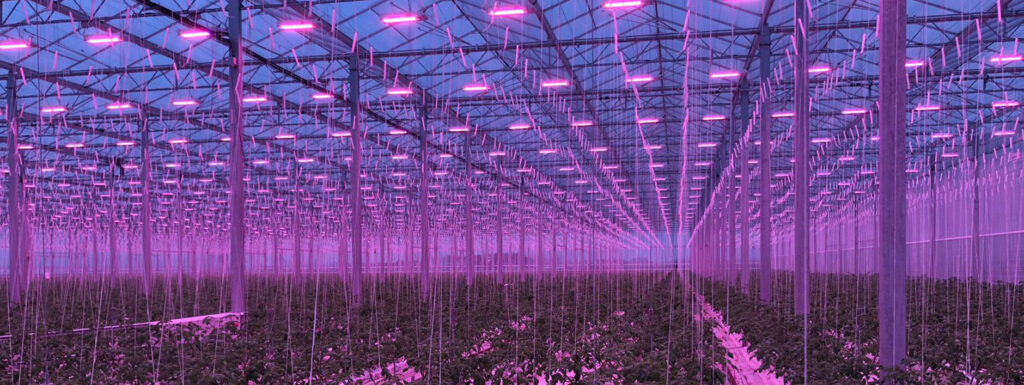
The Greenhouse Innovation Consortium (GIC) is asking UK greenhouse growers, equipment suppliers, investors and other industry participants to assess a proposed ten-year programme for modernising and expanding the country’s food-producing glasshouses. Its UK Greenhouse Modernisation and Expansion Programme (UK-GMEP) consultation remains open until 30 November 2026, giving businesses an opportunity to challenge the plan before the consortium prepares a version for government consideration.
The consultation was announced on 30 September by the Chartered Institute of Horticulture. UK-GMEP is a sector-led proposal, not an approved government funding programme. The organisers are asking whether its proposed mechanisms would work in practice, which barriers may prevent uptake and which investment needs have been missed.
Renewal plans extend beyond greenhouse technology
According to Edge Hill University, the proposed framework treats greenhouse infrastructure as an interconnected system rather than a series of isolated technology purchases. Its scope spans glasshouse construction and replacement, finance, energy and water access, planning, procurement, labour, skills and innovation. Feedback will inform the next draft before UK-GMEP is presented to government.
That is a material distinction for operators evaluating capital expenditure. A retrofit that improves water efficiency, access to heat or building layout may be commercially different from purchasing an advanced machine, even if both are described as innovation. The consortium has not announced a funded national rollout, approved investment allocations or a government commitment under UK-GMEP.
Robotics funding prompts a separate question about commercial payback
The consultation is taking place alongside a public discussion about whether robotics research investment is translating into usable greenhouse equipment. In a LinkedIn post, GIC chair Dr Sven Batke questioned how much public support for complex agricultural robots has resulted in commercial deployments, measured labour savings and demonstrable returns for growers. He argued that simpler automation and greenhouse layouts designed to accommodate machines deserve consideration alongside more technically demanding robotic systems. Those are Batke’s stated views, not findings from a representative grower survey.
There is a concrete public-spending reference point: Innovate UK’s Farming Futures Automation and Robotics Round 2 offered a total fund of up to £20 million for collaborative research and development covering agriculture, horticulture and forestry. Applications opened on 3 August and closed on 30 September 2026. It was not a £20 million grant exclusively for greenhouse operators, and the competition’s existence does not establish how many systems have been commercially installed or what returns they deliver.
In an opinion article published on 6 October, Batke and David Denny of the Horticultural Trade Association argue that ageing UK glasshouse infrastructure reflects longstanding policy and investment constraints. Their proposal is to regard protected horticulture as productive infrastructure linked to energy, planning and financing, rather than assuming successive equipment innovations will resolve structural obstacles on their own.
What industry respondents can influence
For growers, the consultation provides a forum to explain whether modernisation proposals match practical constraints such as the cost of replacing older glasshouses, access to grid capacity or low-carbon heat, water security and the feasibility of long-term financing. Developers and suppliers can also identify where planning delays, infrastructure design or a lack of clear customer demand make technology adoption difficult. These are questions for respondents to address, not confirmed shortcomings at every UK site.
The next measurable milestone is the 30 November consultation deadline, followed by the consortium’s revised programme and any subsequent government response. Until those steps occur, companies should not treat UK-GMEP as an available subsidy or rely on unannounced public funding in investment budgets.
Key takeaways
- GIC’s proposed ten-year UK greenhouse renewal framework is open for industry consultation until 30 November 2026; it has not been adopted or funded by government.
- A parallel LinkedIn debate questions how robotics R&D can demonstrate real-world commercial savings, without establishing a sector-wide consensus.
- Growers and suppliers can use the consultation to test whether finance, energy, water, planning and workforce proposals are practical for actual greenhouse investment.
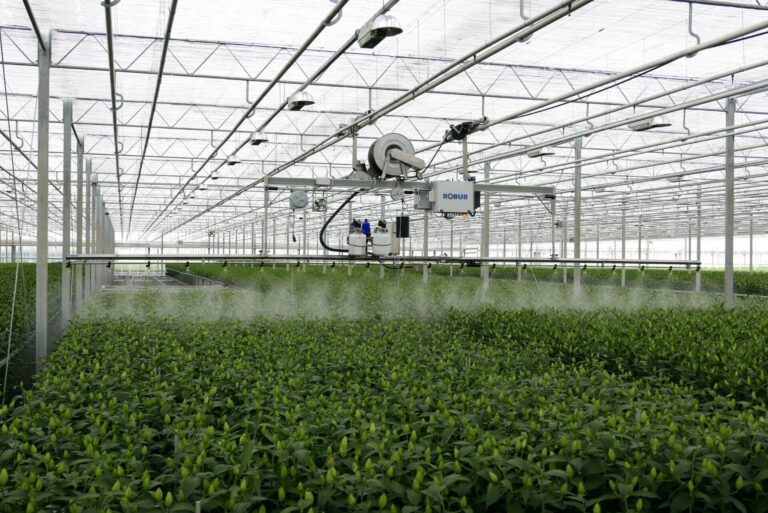
Featured image: The Genesis glasshouse at Flavourfresh Salads’ Melrow Nursery, operated by a Greenhouse Innovation Consortium partner. Archival company photograph, not the UK-GMEP consultation. Photo: Flavourfresh Salads.