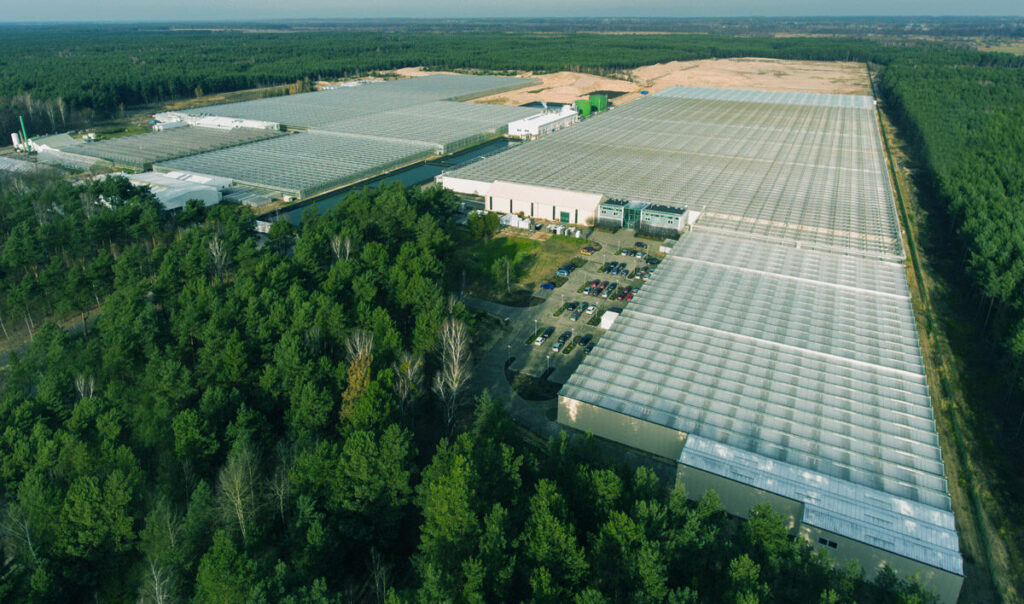
Polish ornamental grower JMP Flowers is using Gardin plant-feedback sensors to decide when supplemental lighting is useful for its Phalaenopsis orchids. In an October 2026 supplier case study, Gardin describes how the grower’s team combines real-time photosynthetic-efficiency readings with greenhouse light, temperature, CO₂ and screen data to adjust cultivation decisions.
This is a described application at a named commercial grower, not a newly announced sensor product or proof of independently measured energy savings. The case includes operational examples from 27–29 September 2026 but does not establish the date when JMP Flowers first installed the system.
Orchid light use changes over the day
Phalaenopsis orchids rely on crassulacean acid metabolism (CAM): they absorb carbon dioxide mainly at night and store it as malic acid for use in daytime photosynthesis. Once those reserves are depleted, extra lighting may no longer increase productive light use. That makes a fixed daily light integral target an incomplete guide to how long supplementary lamps should operate.
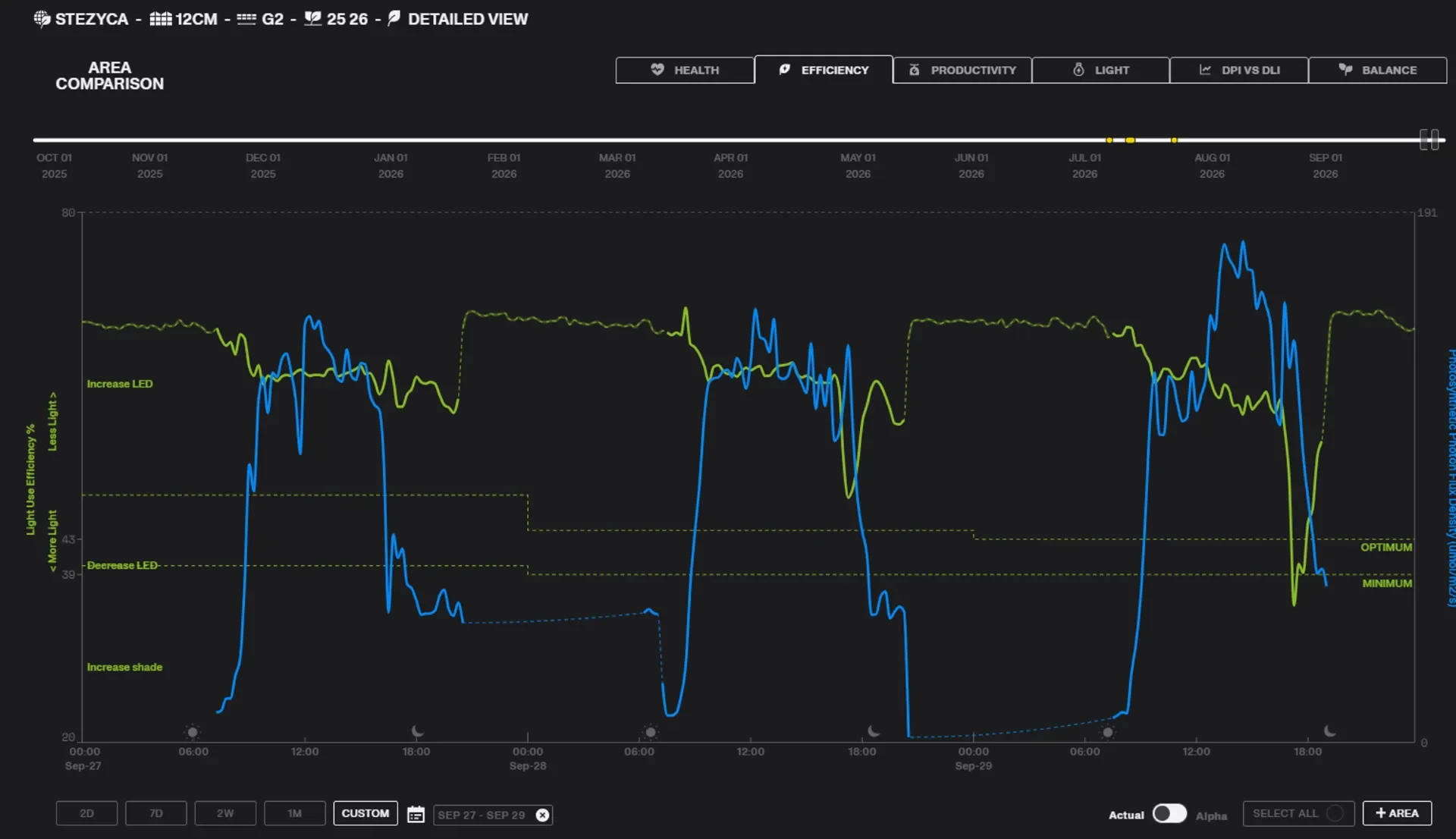
According to Gardin, JMP Flowers uses its sensors alongside photosynthetic photon flux density (PPFD), LED schedules and other climate measurements to identify when the plants’ light-use efficiency starts to decline. The supplier’s chart shows that efficiency remained comparatively stable late in the day on 27 and 28 September, when the grower extended lighting. On 29 September, efficiency fell sharply at about 16:30, consistent with malate depletion, and the team chose not to extend supplemental lighting that evening.
From climate settings to plant-response decisions
JMP Flowers’ plant-team leader Andrii Panfilov says the data is also being used to assess changes in climate screens, CO₂ dosing, fogging and irrigation, as well as morning lighting. The operating approach adds a crop-response measurement to the traditional practice of controlling greenhouse conditions against predefined climate targets.
The business relevance is clearest where lighting consumes electricity but produces diminishing returns late in the photoperiod. Gardin and the grower report improvements in crop growth and quality, but the published customer case does not provide independently verified yield, energy-cost or payback figures. The scale of Gardin’s installation across JMP Flowers’ greenhouse area is also not specified.
Key takeaways
- JMP Flowers uses Gardin sensors in commercial Phalaenopsis production to supplement climate and lighting-control data with plant-response measurements.
- Gardin’s 27–29 September case shows two days of extended lighting and one day when lighting was not extended after efficiency dropped.
- The example demonstrates an operational decision process, not independently quantified crop-quality gains or energy savings.