

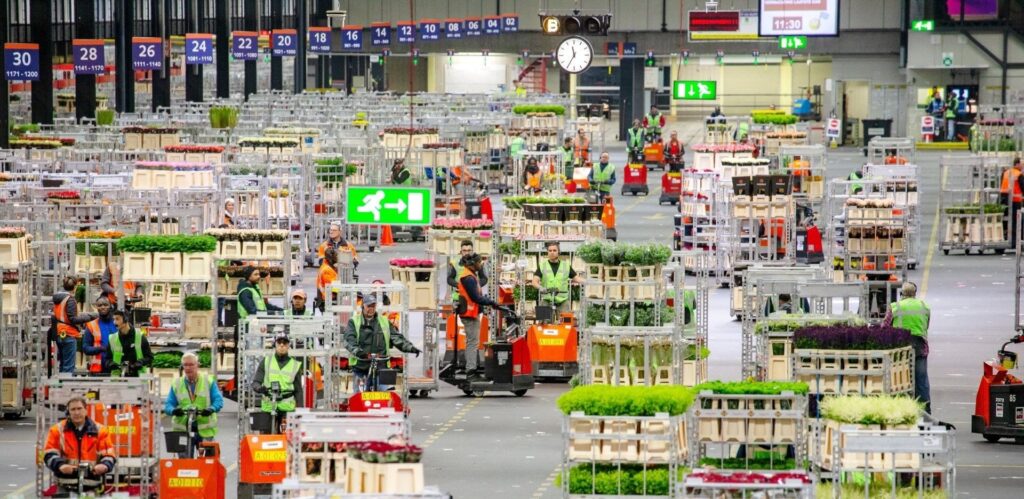
Employers and unions in the Netherlands’ flower and plant wholesale sector have secured member approval for a new collective labour agreement that raises pay scales in two steps during 2027. The industry association VGB said on 27 October that majorities of both CNV and FNV union members backed the negotiated terms, with formal signatures and the final consolidated agreement text still to follow.
The settlement directly concerns flower and plant wholesale employees, not a wage agreement for every Dutch greenhouse grower. Its labour-cost implications are nevertheless relevant to ornamental producers that depend on wholesalers for distribution, export and market access.
Two wage increases in early 2027
According to VGB’s confirmation and FNV’s member-vote update, the agreement covers 1 October 2026 through 30 September 2027. Negotiators agreed a 3% increase to sector pay rates and salary scales on 1 January 2027, followed by another 1% increase on 1 April. The unions describe this as a structural wage rise of about 4% in total.
The existing 1% year-end payment continues until 31 December 2026. From January 2027 it ceases as a separate allowance and is incorporated into regular pay, according to FNV. Companies will need to model the timing of these changes rather than treat the 2027 increases as a single adjustment at the start of the year.
Travel and care arrangements also change
The commuting allowance rises to a maximum of €0.25 per kilometre for a journey of up to 30 kilometres each way. The package also introduces arrangements for employees combining work and informal caregiving: eligible workers may temporarily work 80% of their hours while receiving 80% pay and continuing 100% pension accrual, for a period of up to six months under specified limits.
FNV also reports an increase in employer pay during statutory short-term care leave to 85%, subject to the applicable daily-wage ceiling. Employers should consult the completed collective agreement when implementing individual entitlements and payroll settings.
What it means for commercial horticulture
Labour, transport and energy are major operating expenses in Dutch flower and plant trading. FNV said employers cited weaker demand and pressure on margins during negotiations; those are the parties’ stated positions, not proof that all wholesalers face the same financial conditions.
For wholesale management, the practical work is to reforecast payroll, commuting and leave costs before the January and April steps. Growers may see indirect effects in logistics fees or supply-chain margins, but this agreement does not automatically reset wages in their own nurseries.
The employers’ association says the parties will sign the new agreement once the detailed text has been prepared. Until then, the approved negotiating result and current published documents are the relevant references.
Key takeaways
- Union members approved a new Dutch flower and plant wholesale agreement, with signing and the final text still pending.
- Pay scales increase 3% on 1 January 2027 and a further 1% on 1 April; commuting and care benefits also change.
- The agreement directly covers wholesalers, with only indirect potential implications for commercial growers and exporters.